As a student in the Rutgers Master of Business and Science (MBS) degree program, concentrating in Biotechnology & Genomics, I am accustomed to thinking about science and innovation from both technical and business perspectives. Attending the America at 250: Lecture Series | Part 1: The Constitution as a Business and Science Document, led by MBS Professor Ronald Levine, laid a foundation in understanding the intricate connection between innovation and ethics.
What surprised me most was realizing how deeply legal considerations are woven into my field. And that’s why this visit to the federal bench for the next lecture was especially interesting.
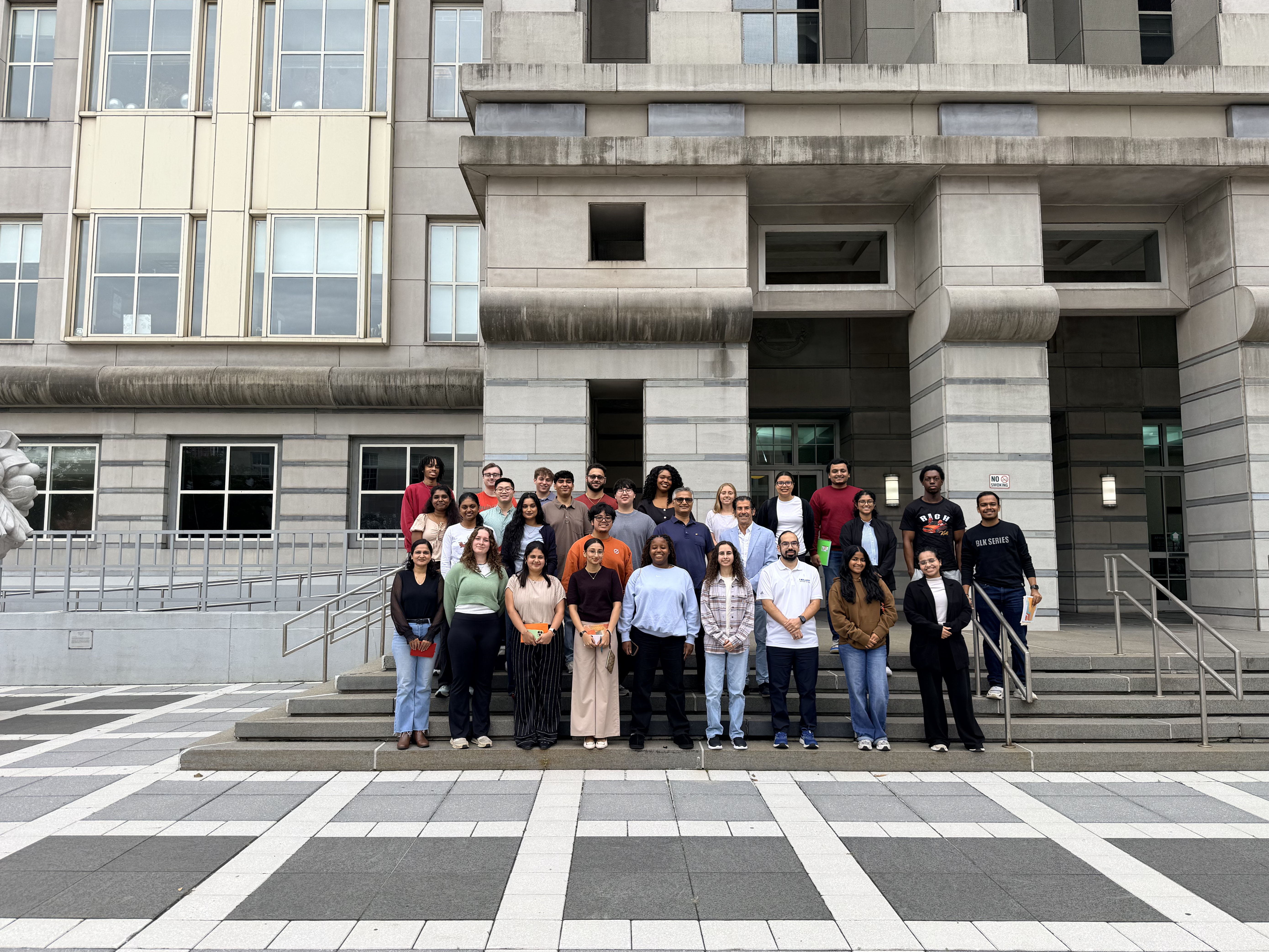
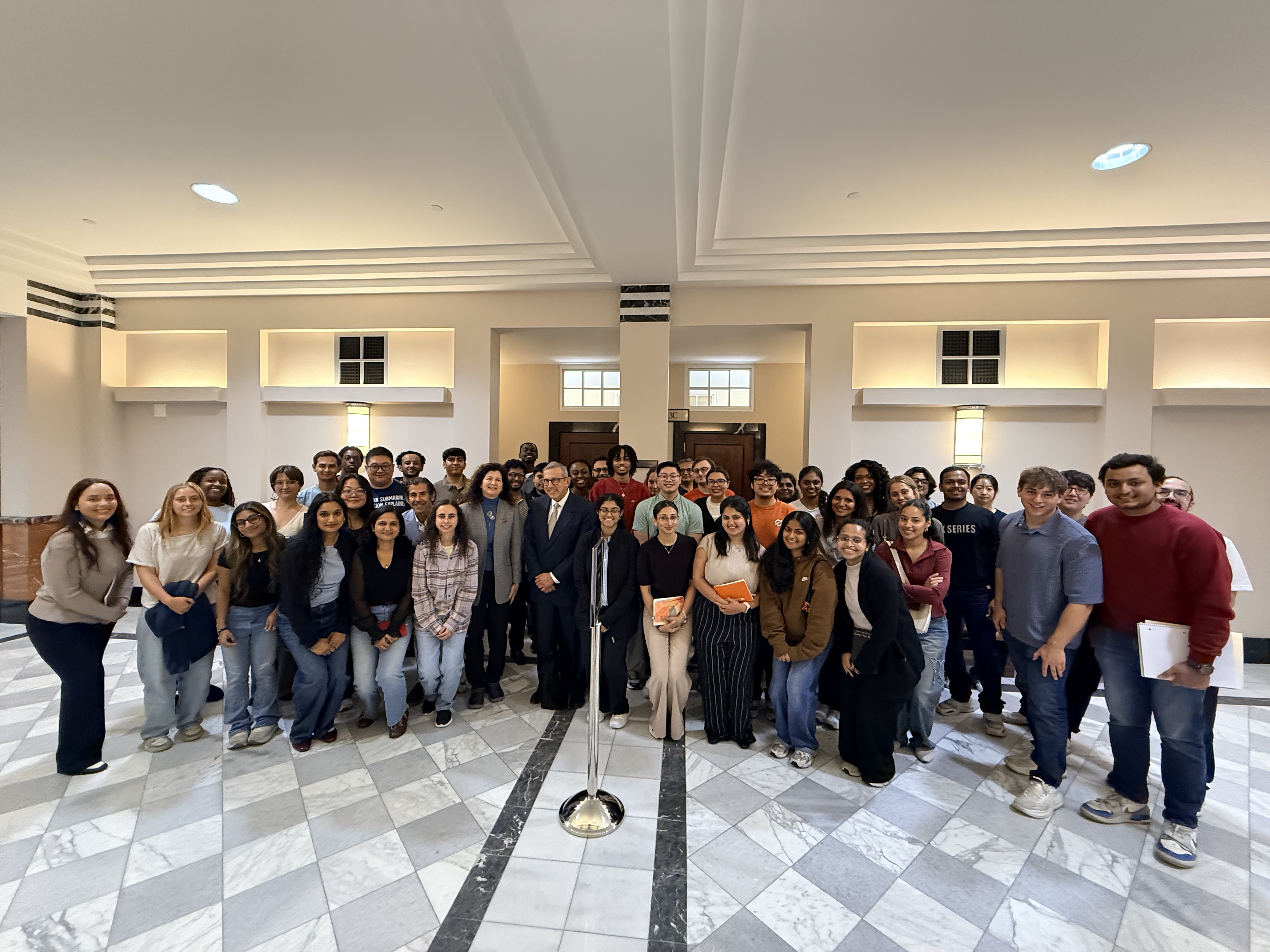
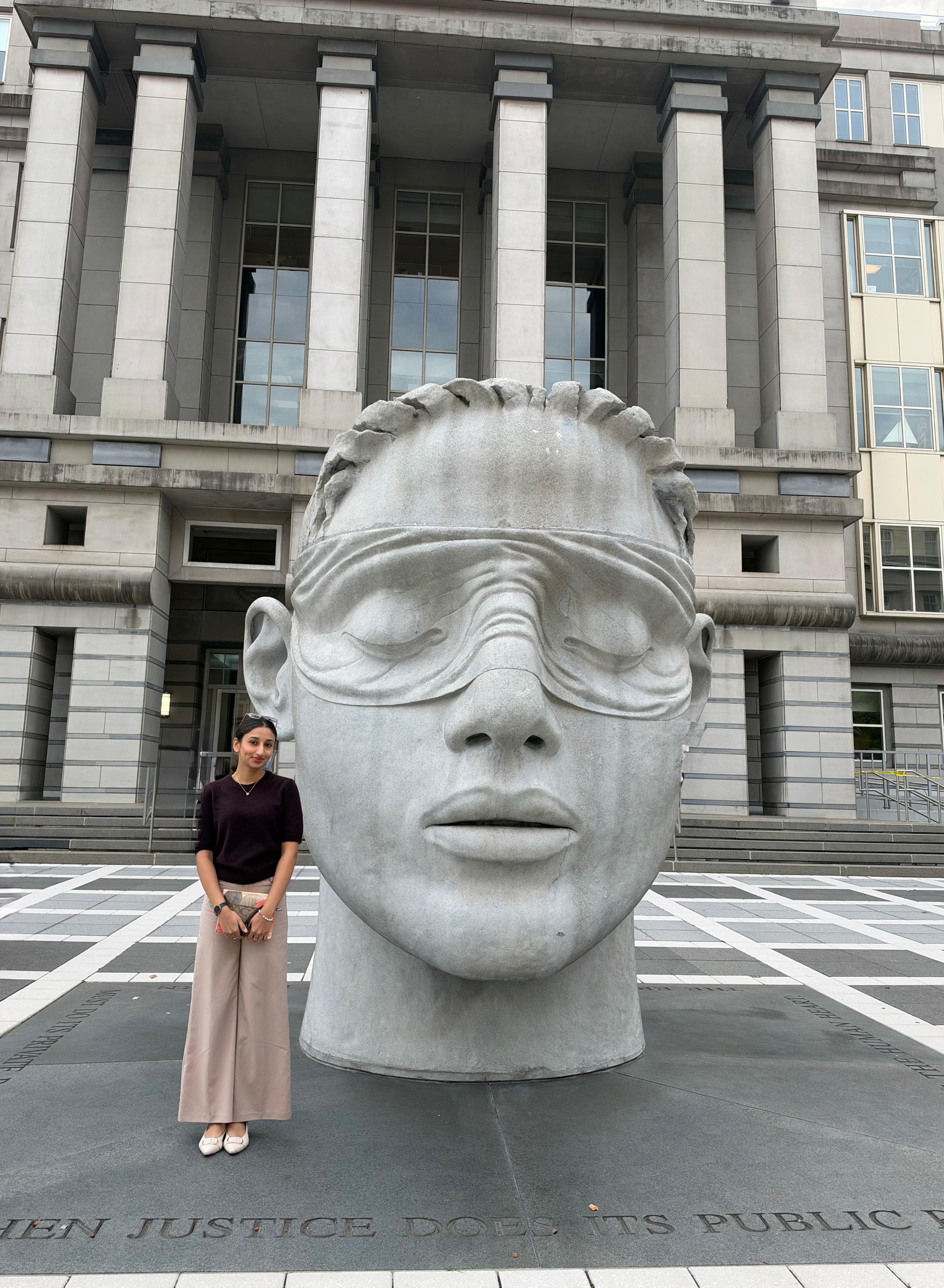
As part of the America at 250: Lecture Series, I had the opportunity to visit the United States District Court for the District of New Jersey in Newark and hear directly from a sitting federal magistrate judge and a former magistrate judge about how the court system operates, the types of cases they handle, and some of the challenges the judiciary faces today. This lecture allowed me to understand how ethics, regulation, and the legal system shape the way innovation moves forward.
From Classroom to Courtroom
One of the most valuable parts of the experience was simply being inside the courtroom. Hearing about the different parts of the courtroom, how cases move through the system, and the role of judges felt very different when we were sitting in that environment. It made the judicial process feel much more real and much less abstract than learning about it from a textbook.
We also heard from Magistrate Judge Hedges and Magistrate Judge Wettre, who shared their experiences and perspectives from the bench as they answered questions from my classmates. Their discussion covered a wide range of issues, from the volume of cases handled by the courts to the practical realities of litigation. What stood out to me was how many of these topics connected back to industries that MBS students may eventually work in.
Because my concentration is Biotechnology & Genomics, I was especially interested in the conversation around patents, pharmaceutical litigation, and scientific evidence.
Biotechnology and pharmaceutical companies operate in highly regulated environments, where government agencies, intellectual property protections, patient safety, and business decisions often intersect. The discussion helped me see that innovation does not end once a scientific discovery is made. There are also questions about how that innovation is protected, challenged, regulated, and sometimes defended in court.
I also heard about how scientific evidence is evaluated in legal settings. Learning about concepts such as the Daubert standard, which judges use when considering whether expert scientific testimony is reliable enough to be presented to a jury, was especially interesting to me. It showed how science must be communicated and evaluated very differently once it enters a courtroom.
Another part of the conversation that caught my attention was the growing impact of technology on the legal system. Topics such as artificial intelligence (AI), copyright, cybersecurity, and hacking all came up during the visit. One of my biggest takeaways was how quickly technology is developing and being integrated in various fields, as opposed to the use of AI in the court. Courts are increasingly being asked to address issues involving AI, even while states and institutions are still working through their own guidelines and policies.
That connection between innovation and regulation felt very relevant to my own field. Biotechnology is also constantly evolving, and new scientific developments often raise questions about ethics, regulation, intellectual property, and public impact. The visit reinforced the idea that professionals working in science-driven industries need to be more well-versed with the laws rather than just the science.
Learning from the experience
For me, the lecture was a strong example of experiential learning. When I look back, I will never forget the atmosphere and the feeling of being in a courtroom.
My biggest takeaway from the visit was how closely science, business, ethics, regulation, and law are connected. A scientific discovery can eventually become a business decision, a regulatory question, an ethical concern, or even a legal dispute.
Being able to see that connection firsthand made the visit truly valuable. It was a reminder that some of the most valuable learning happens when we step outside the classroom and see how these systems actually work together in the real world.
This article was guest-written by MBS student Priyal Gor.