As artificial intelligence reshapes industries from healthcare to finance, today’s graduates are entering a workforce where success depends on both understanding emerging technologies and knowing how to use them responsibly, creatively, and with people in mind.
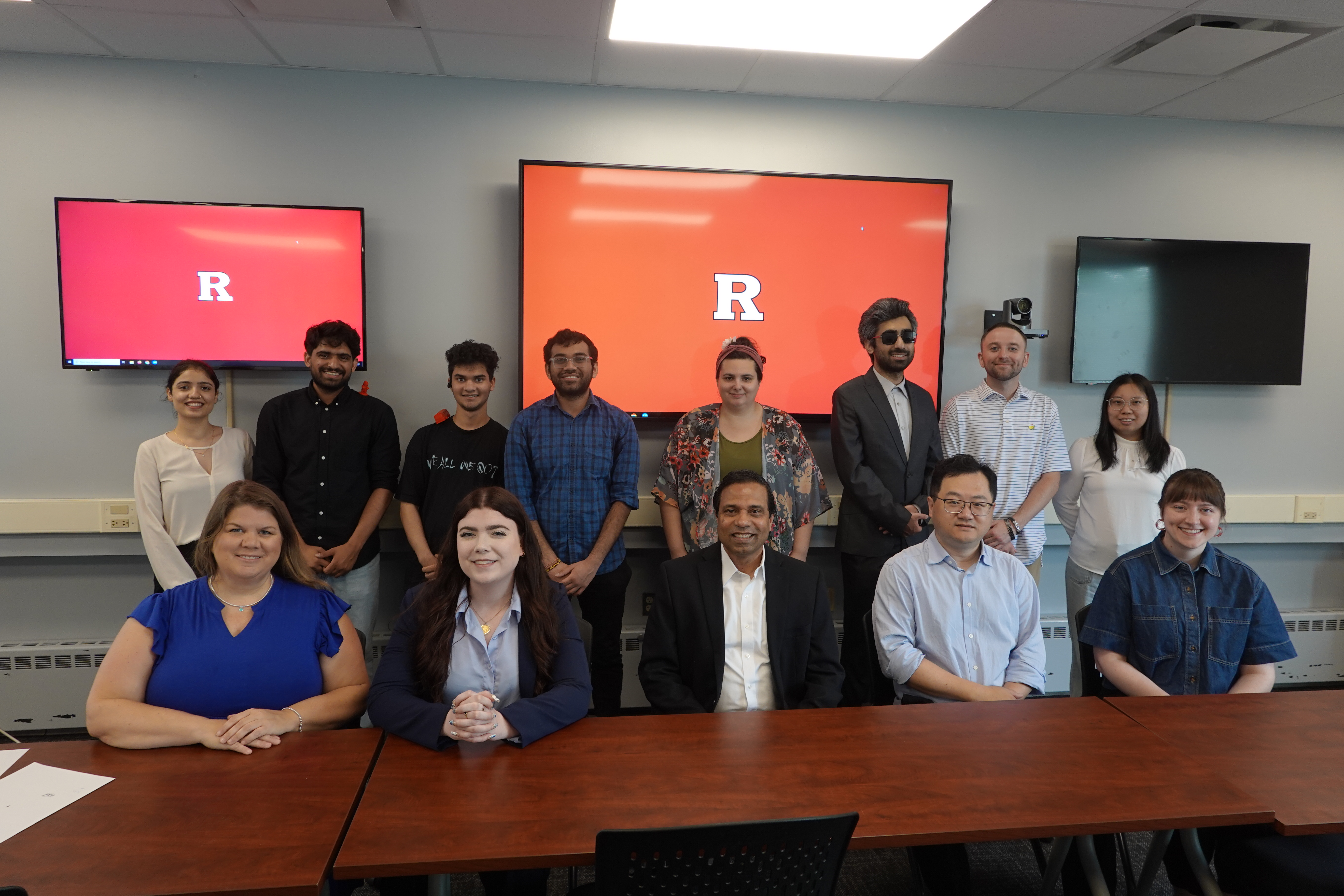
To help students build those skills, the Rutgers Master of Business and Science (MBS) degree program launched “Design Thinking, Innovation & Human-Centered AI,” a new immersive course that brings together artificial intelligence, design thinking, and experiential learning. Offered for the first time during the summer 2026 semester, the two-week studio challenged students to identify authentic problems around campus, develop creative solutions, and bring their ideas to life through hands-on prototyping at the Rutgers Makerspace.
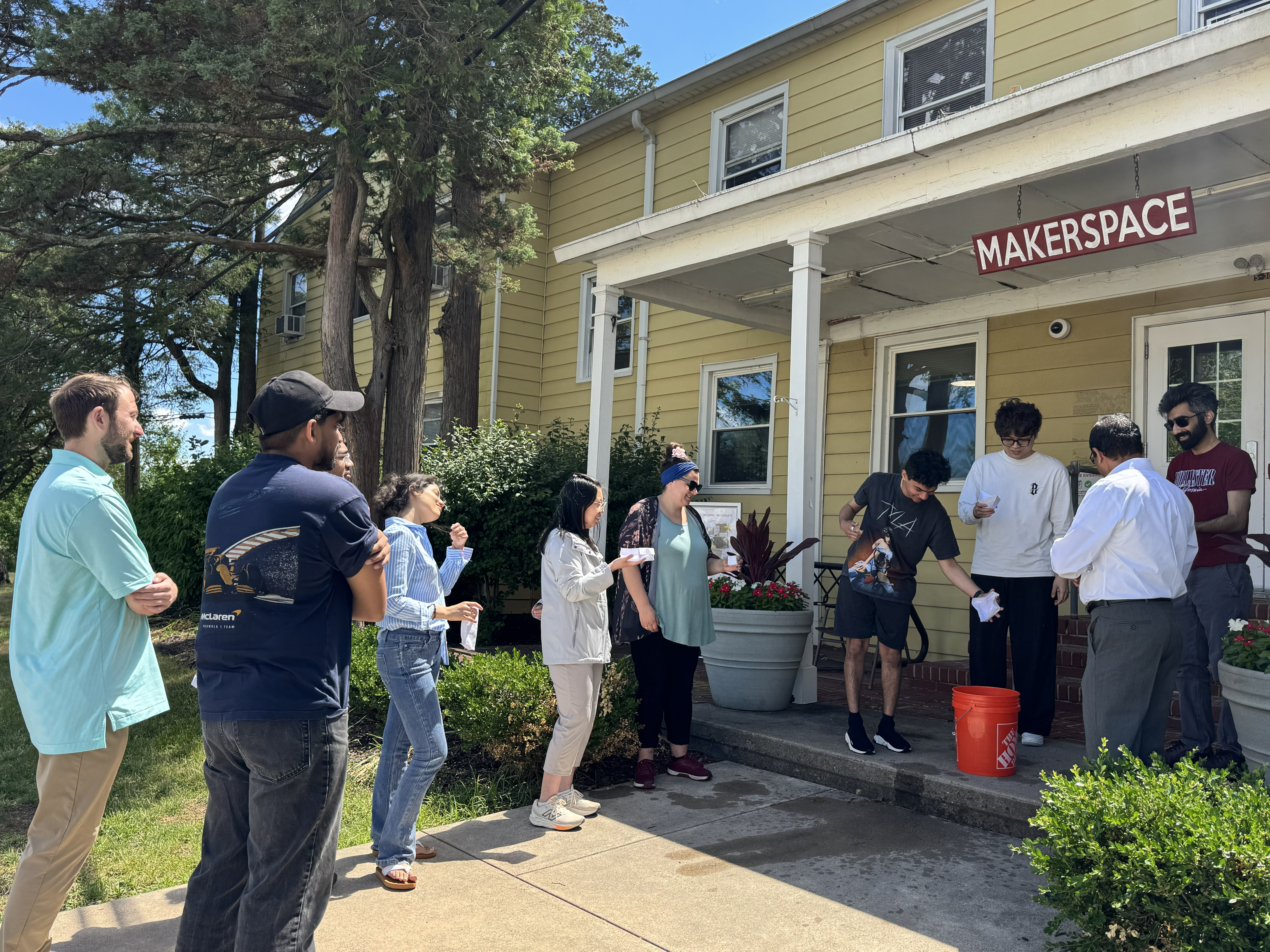
Inside the Studio
“I created the Human-Centered Innovation Studio because I wanted students to experience innovation rather than simply learn about it,” said course instructor Rupa Misra, MBS User Experience Design and Product Design faculty and coordinator. “The most important challenges we face today, whether in healthcare, technology, business, or society, cannot be solved through technical knowledge alone. They require creativity, empathy, collaboration, and the ability to understand people before developing solutions.”
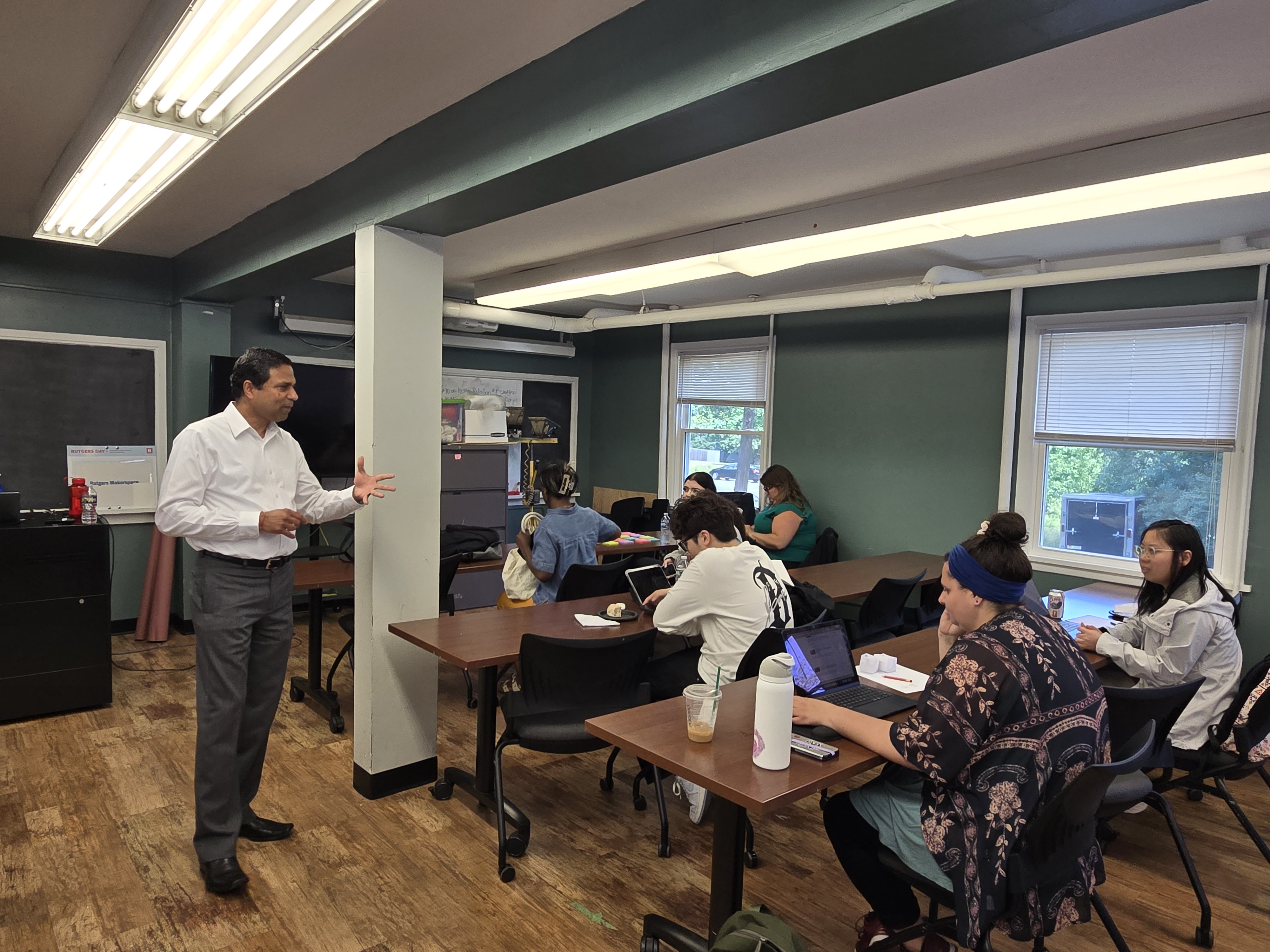
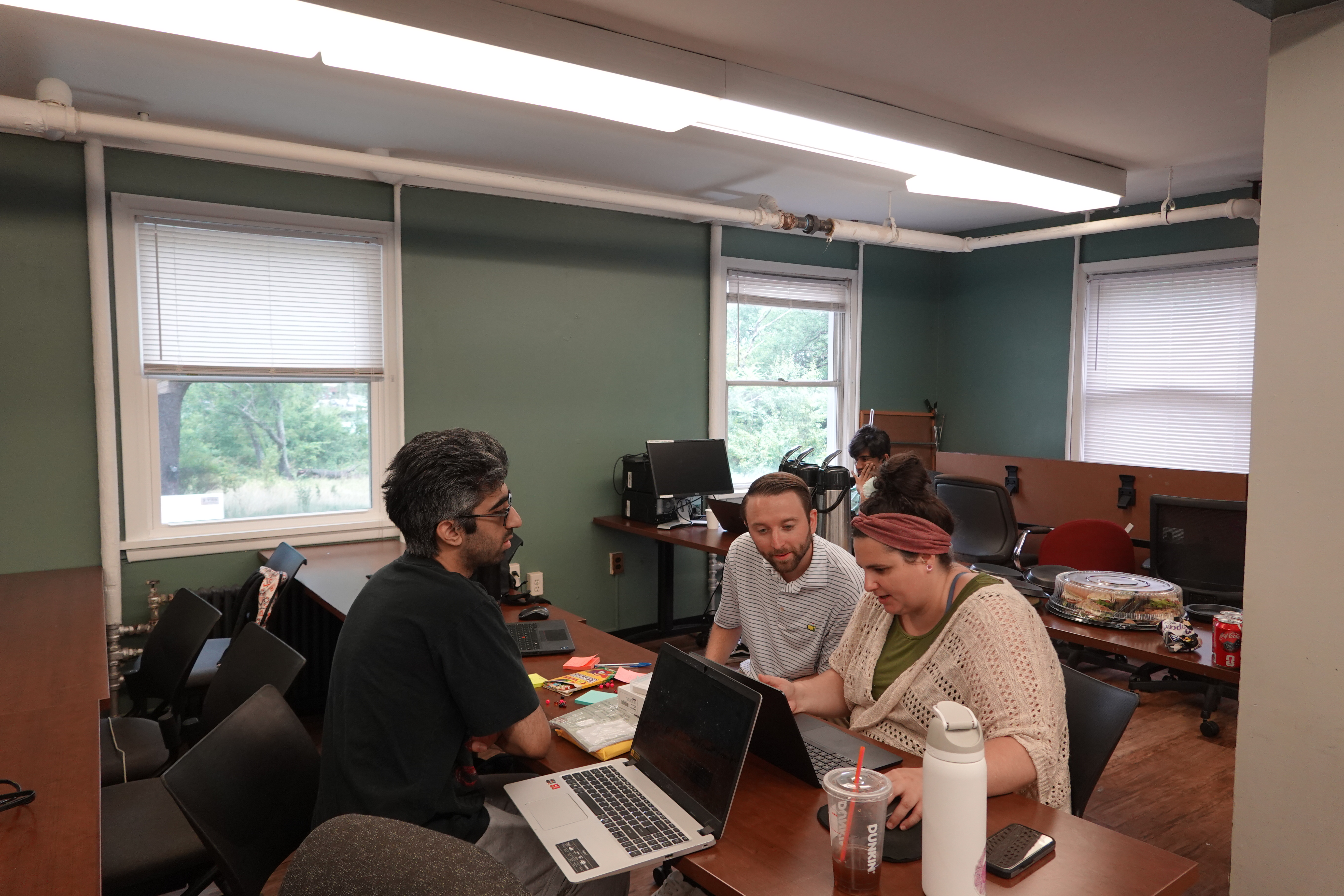
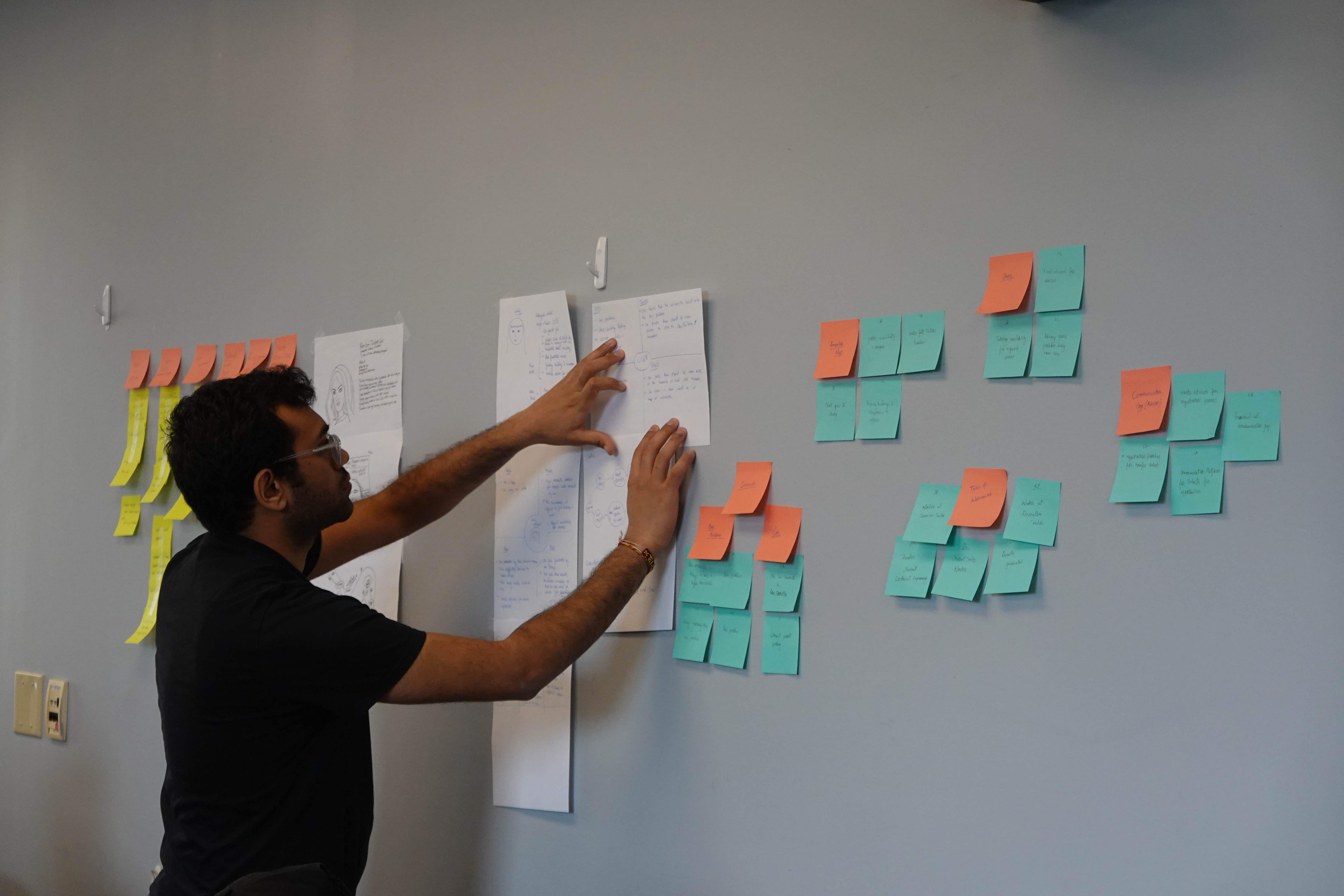
Working in teams, students explored Rutgers’ Busch campus to identify real-world challenges through observation, interviews, and user research. From there, they moved through the design thinking process:
- understanding user needs
- defining problems
- generating ideas
- developing prototypes
- refining their concepts through testing and feedback
“The experience closely reflected how interdisciplinary teams work in professional innovation environments,” said Misra, “where learning happens through collaboration and rapid iteration.”
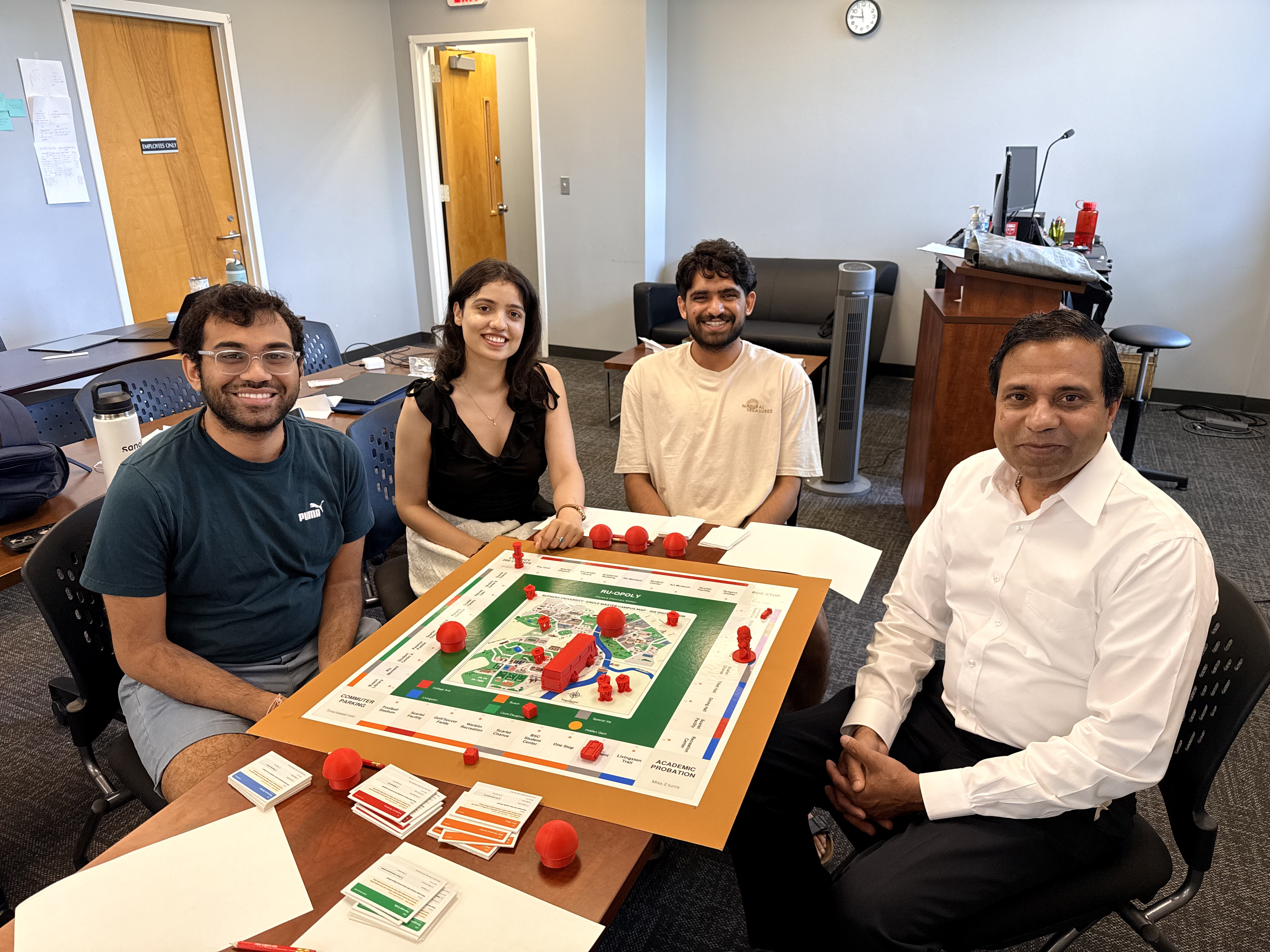
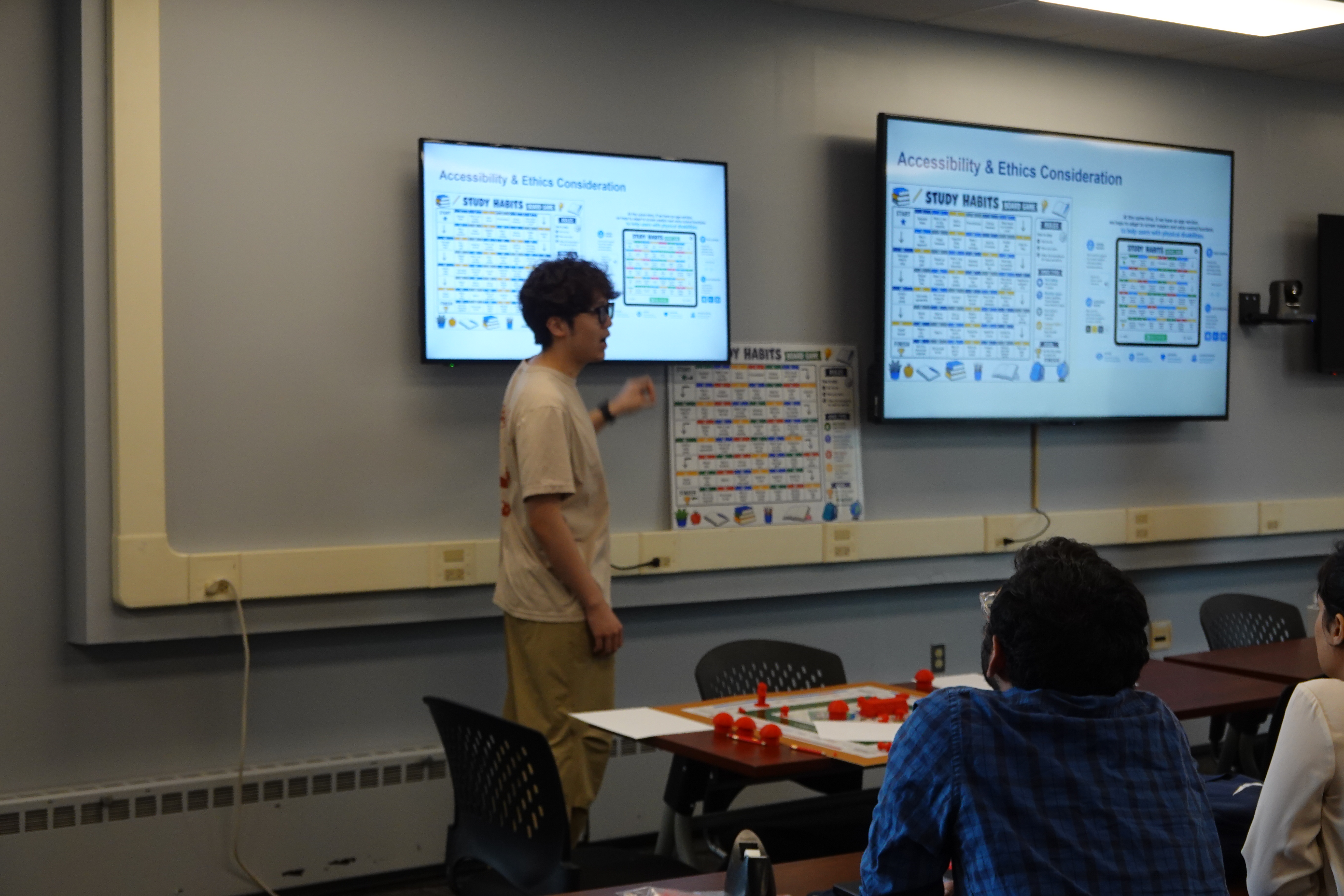
For their final projects, teams designed and built physical board games that addressed the challenges they had identified through gamification. Students developed the game mechanics, rules, visual design, and overall user experience, then fabricated many components using laser cutters, 3D printers, and other equipment in the Rutgers Makerspace.
One group found that new and transfer students had difficulty finding classrooms and buildings on campus and lacked knowledge of the amenities Rutgers offers.
“We created RU Monopoly,” said group member Dharm Patel. Modeled after the board game Monopoly, the game included a board, tokens, cards, and a monetary system. Other groups created games around study habits and AI hallucinations.
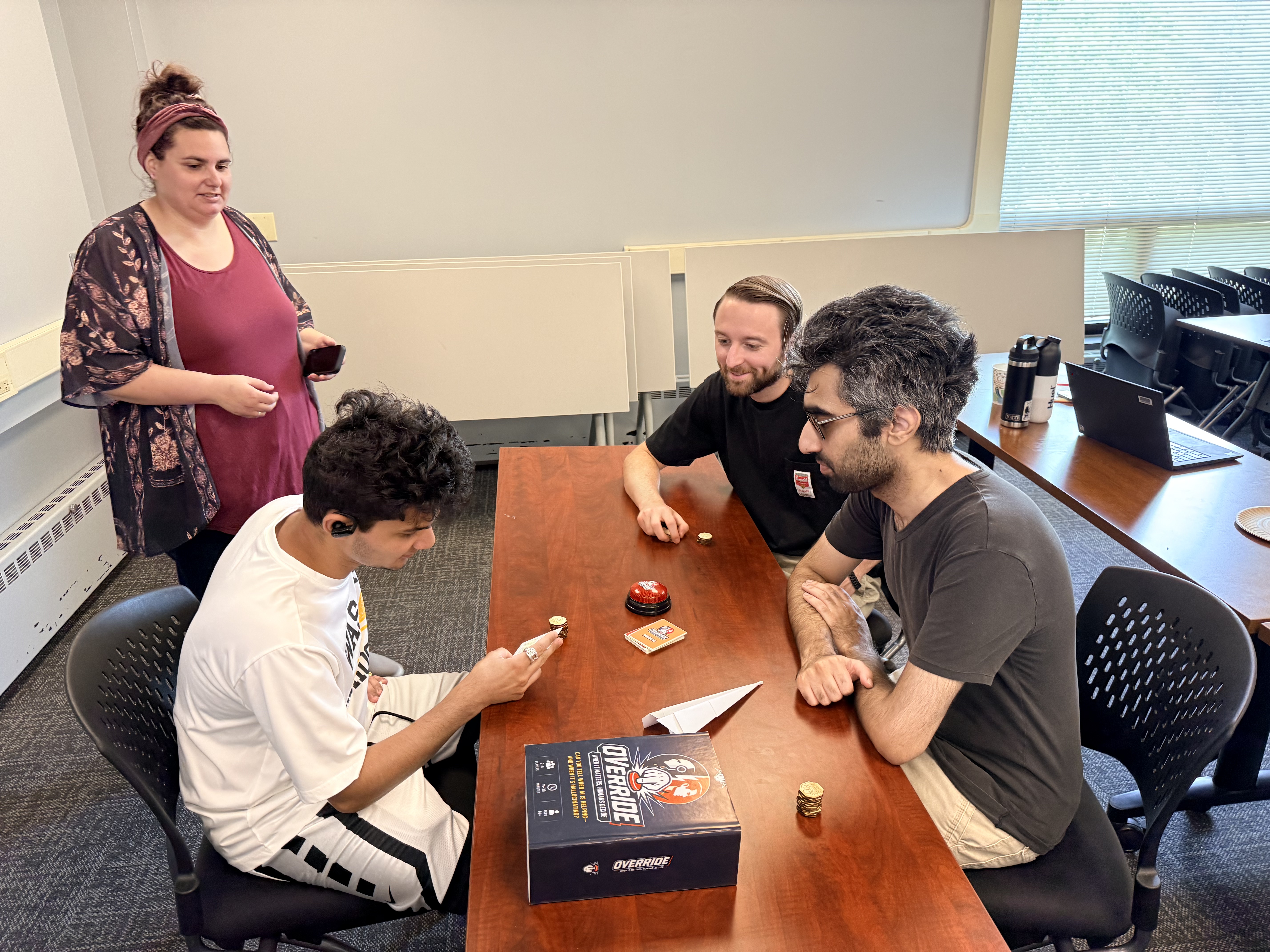
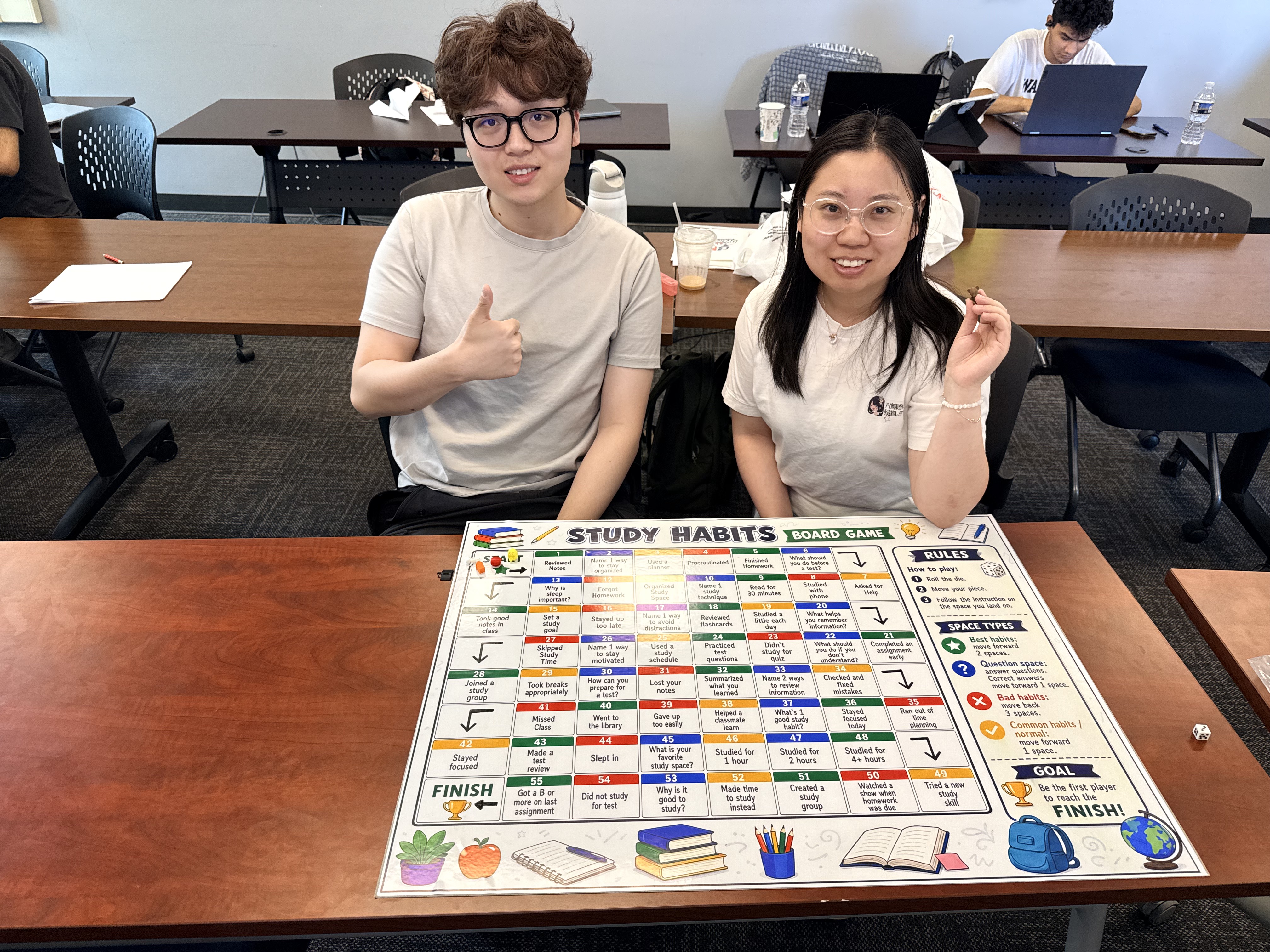
“Innovation is an active process,” said Misra. “It develops through continuous collaboration, experimentation, feedback, and refinement, not through isolated lectures.”
The Rutgers Makerspace, located on the Livingston Campus, enables Rutgers students, faculty, and staff to learn and apply making skills such as 3D printing and design, digital fabrication and manufacturing, woodworking, and sewing. The MBS degree program has incorporated the Makerspace into several student experiences, including Externship and the Capstone Retreat.
A central theme of the course was Human-Centered AI: the idea that artificial intelligence should enhance human capabilities rather than replace them.
Throughout the studio, students used AI to brainstorm, organize ideas, explore alternatives, and accelerate the creative process while emphasizing that empathy, ethical reasoning, and understanding human needs remain human responsibilities.
“Technology should support human goals, values, and well-being,” said Misra. “By learning to work thoughtfully with AI, students developed the skills needed to use emerging technologies responsibly while keeping people at the center of innovation.”
A Classroom Without Borders
The studio welcomed undergraduate and graduate students, domestic and international participants, and both credit and non-credit students, creating a cohort with diverse academic and cultural perspectives.
“It’s been really interesting to work with a diverse group of students,” said student Ashwin Kalathia. “I've picked up a little bit on Mandarin now, with both of my groupmates being from China.“
“One of the most rewarding aspects of the studio was watching students learn from one another,” said Misra. “Innovation benefits from diversity because the most creative solutions often emerge when people with different ways of thinking work together toward a shared goal.”
“I think that AI is the future,” said Yifei Ge, a student from Macau University of Science and Technology. “This is a good summer program, and if you are interested in AI and design thinking, you can come here to learn.”
Collaboration is a critical skill in the workplace.
“One thing from this course that I will use right away and apply to my work is collaboration with others,” said MBS student Ian Mullen. “Working in a team in person was beneficial because it mimics reality. In the business world, you come across all sorts of problems, and you need to work with people you might not be used to working with.”
Student Experience and Outcomes
Like all MBS courses, “Design Thinking, Innovation & Human-Centered AI” emphasized experiential learning and practical skill-building. By the end of the two-week studio, students had moved from initial observations to a functioning prototype they could present, test, and refine.
“I would highly recommend taking this course,” said MBS student Kabir Hamirani. “This is a course that allows you to really grasp all these concepts from AI, user empathy, design, and especially in today's world, where AI is being heavily implemented across the industries, this course gives students an advantage in how to design products with the concepts of AI in mind.”
The Makerspace gave students the tools to transform ideas into physical prototypes. That hands-on process helped teams identify design challenges, gather meaningful feedback, and improve their ideas through iteration.
“First of all, we didn’t even know how we were going to make a game out of a problem as a solution,” said student Rushi Patel. “When we were in the Makerspace, we had a brainstorming session. The Makerspace actually helped us to turn the idea into a real-life, 3D product.”
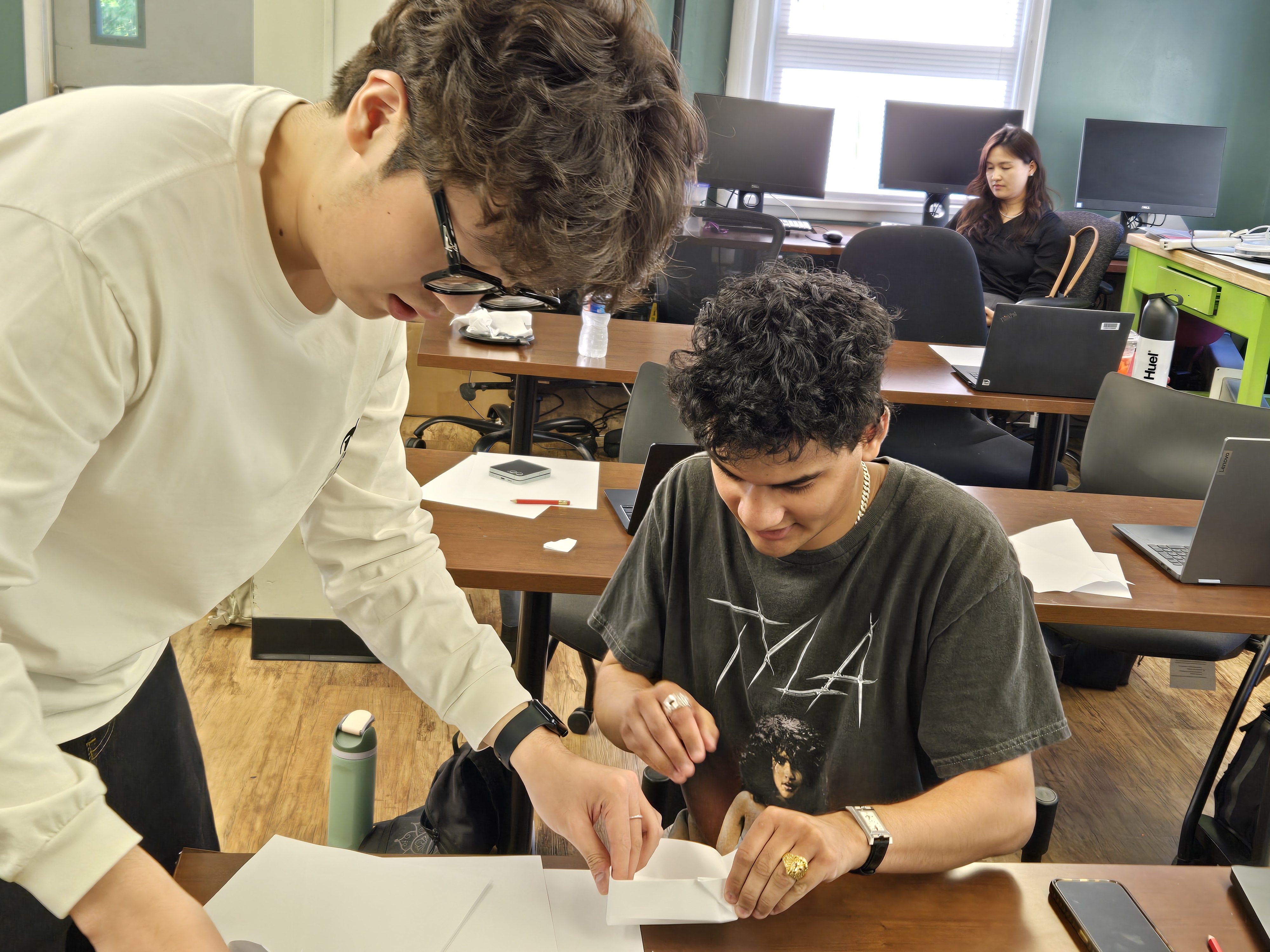
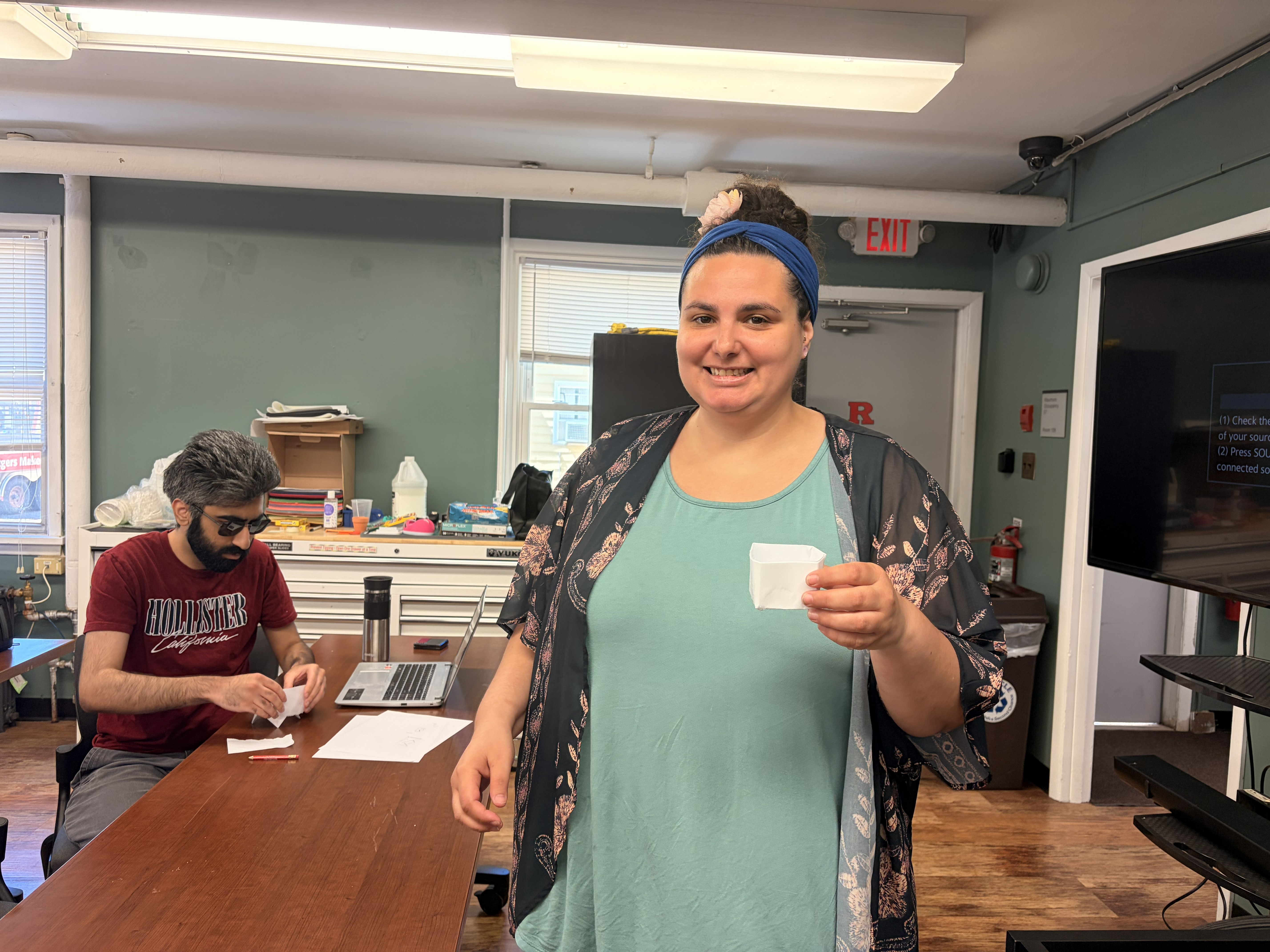
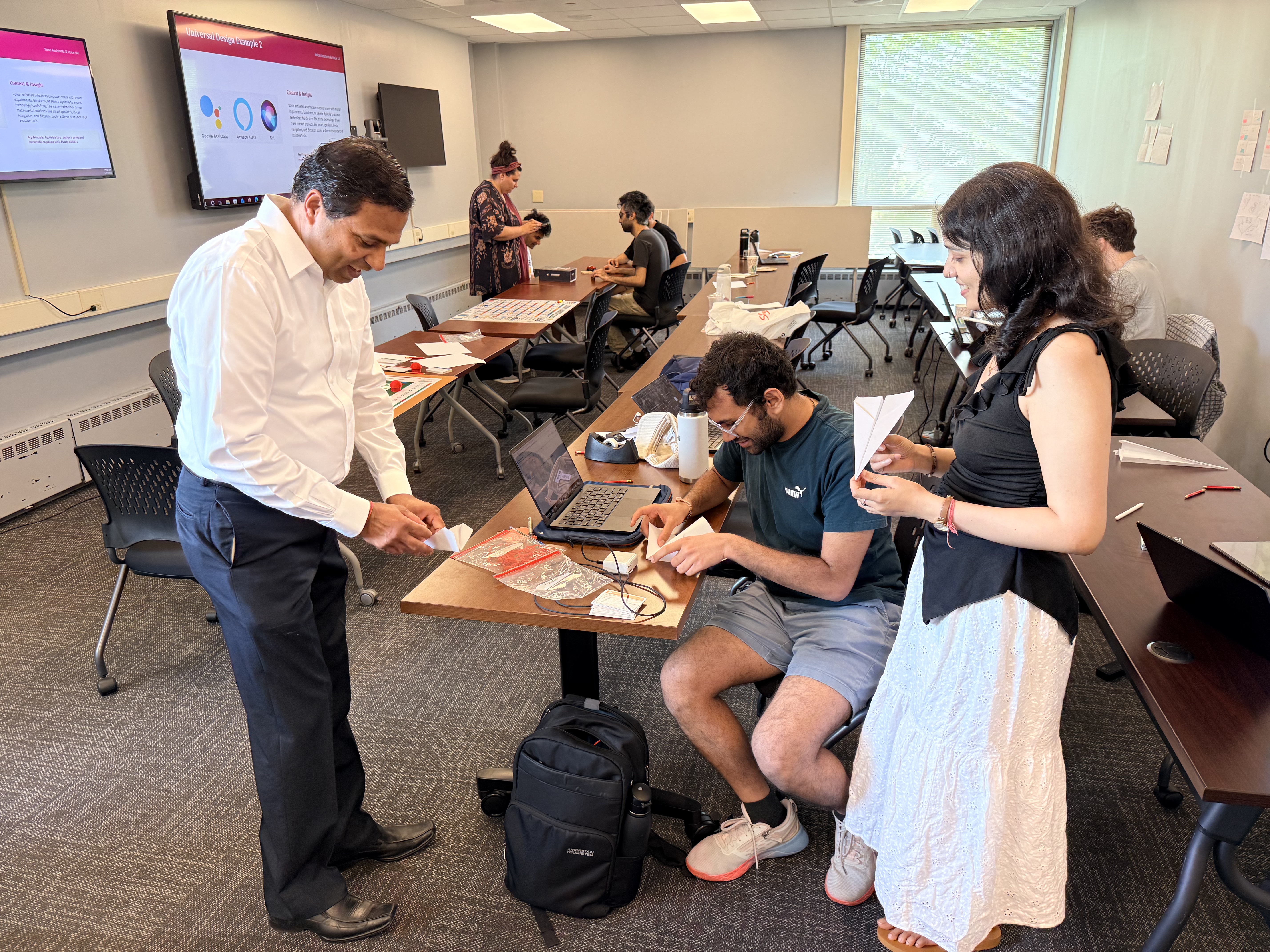
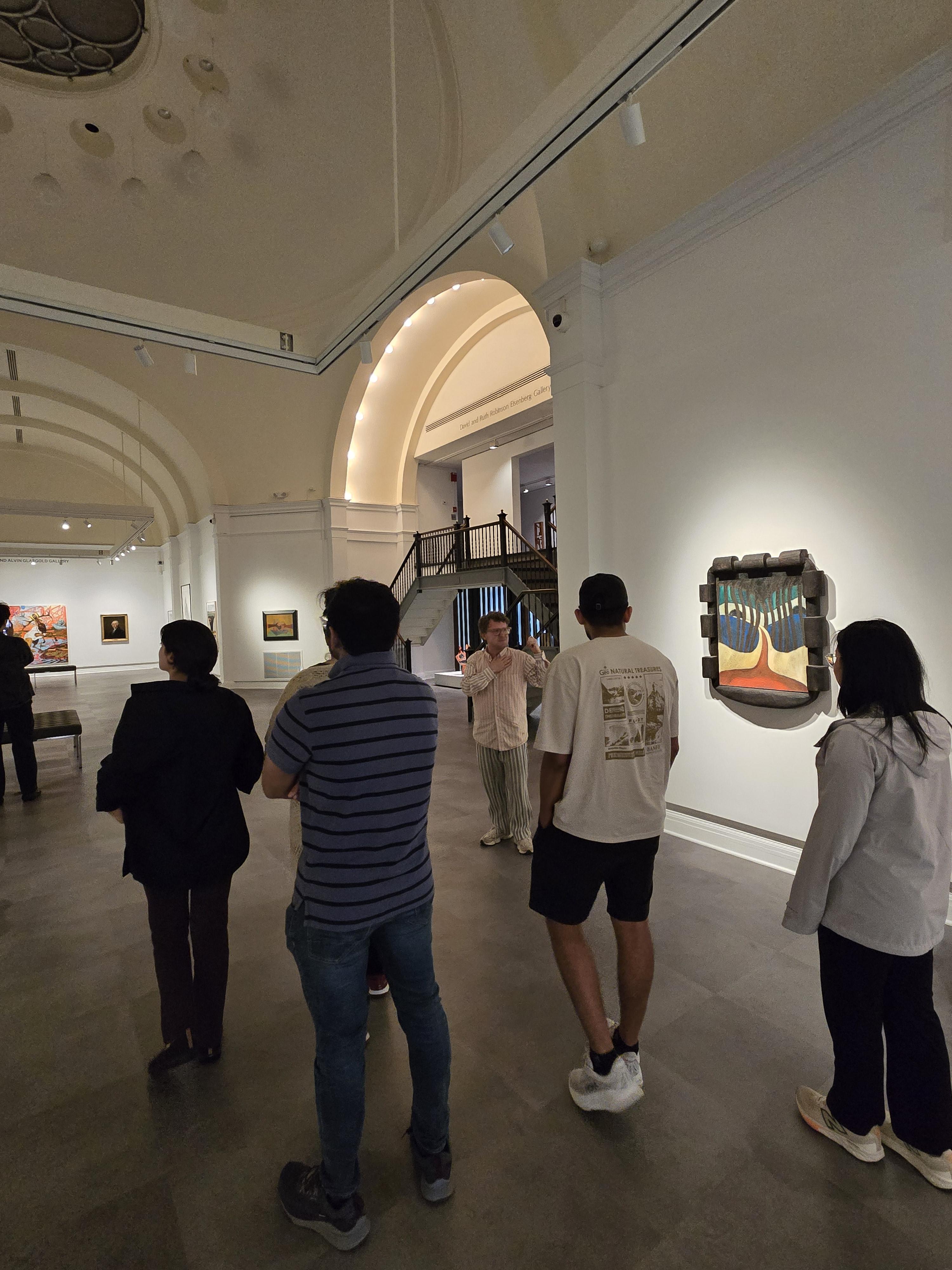
The course also included guest speakers from industry and academia who shared their real-world expertise with students, a field trip to the Zimmerli Art Museum, and a paper-plane throwing contest.
“This course will help me in my career because I’m a scientist,” said Mullen, “so it’s a very analytical mindset, just looking at the numbers quantitatively. Being able to step back and pay more attention to qualitative aspects of my work and have that design mindset going into it will definitely improve my work.”
Students strengthened their skills in communication, resilience, teamwork, user-centered research, and creative problem-solving while gaining confidence in tackling unfamiliar challenges.
Looking Ahead
As AI reshapes many aspects of work and daily life, creative thinking, collaboration, and human-centered design solutions will only become more important.
Recent labor-market data underscores why these skills matter. According to Lightcast’s analysis for the 2026 Stanford AI Index Report, AI skills now appear in 2.5% of all U.S. job postings, a 55% increase from the previous year and a 297% increase over the past decade.
Against that backdrop, courses like “Design Thinking, Innovation & Human-Centered AI” help students develop the adaptable, human-centered skills needed to work thoughtfully with emerging technologies.
“One of the most rewarding aspects of the studio was seeing students become more confident creative thinkers,” said Misra. “As they worked through the Design Thinking process, they became more comfortable asking questions, testing ideas, learning from setbacks, and collaborating with people whose perspectives differed from their own.”
Innovation begins with understanding people, recognizing opportunities, and having the curiosity and courage to explore better solutions.
“As artificial intelligence continues to reshape many aspects of our lives,” said Misra, “I believe the ability to think creatively, collaborate effectively, and design solutions that genuinely improve people's lives will become even more important. My hope is that students leave the studio not only with new skills, but with the confidence and mindset to become thoughtful innovators who use technology responsibly and always keep people at the center of what they create.”