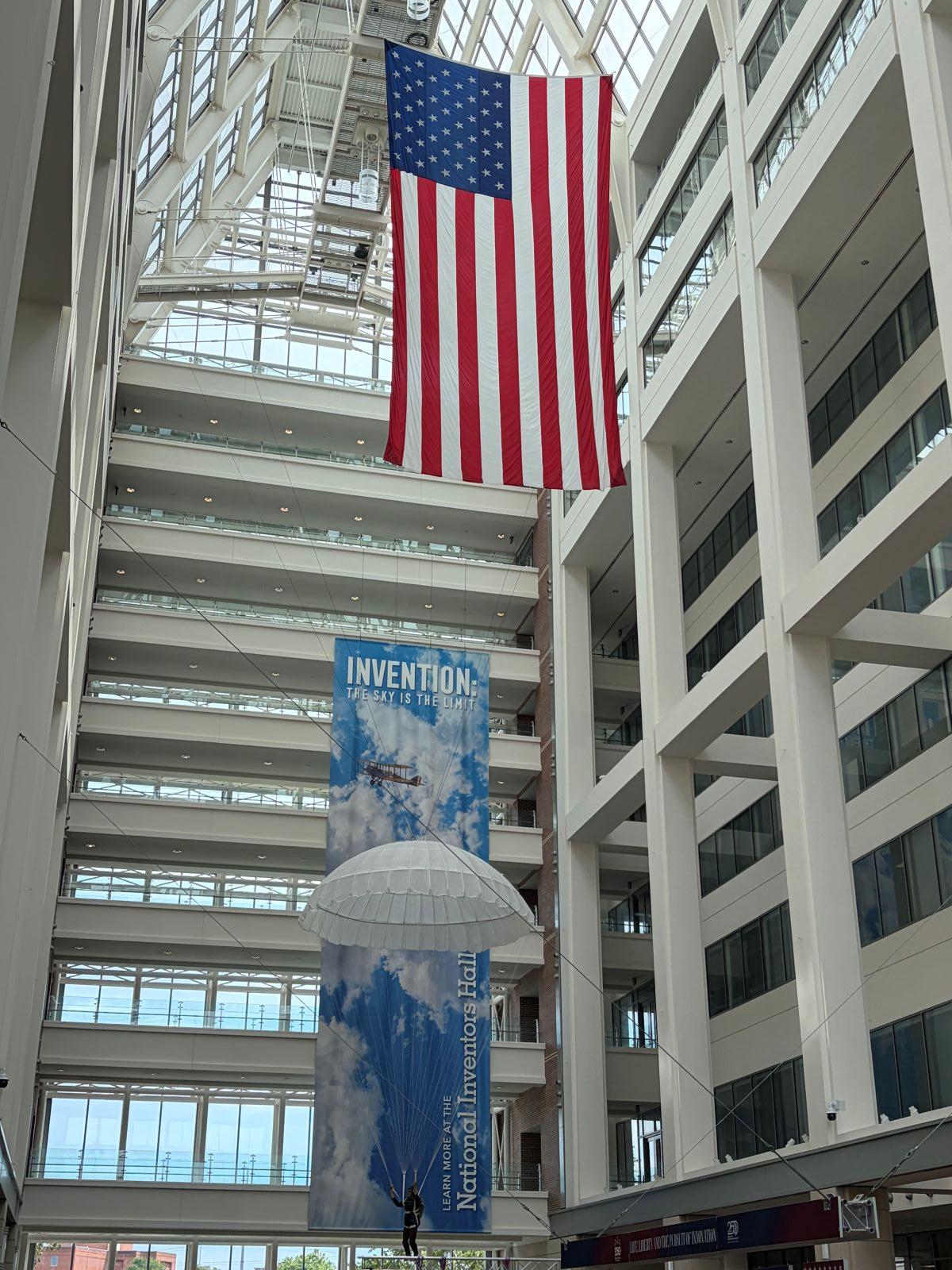
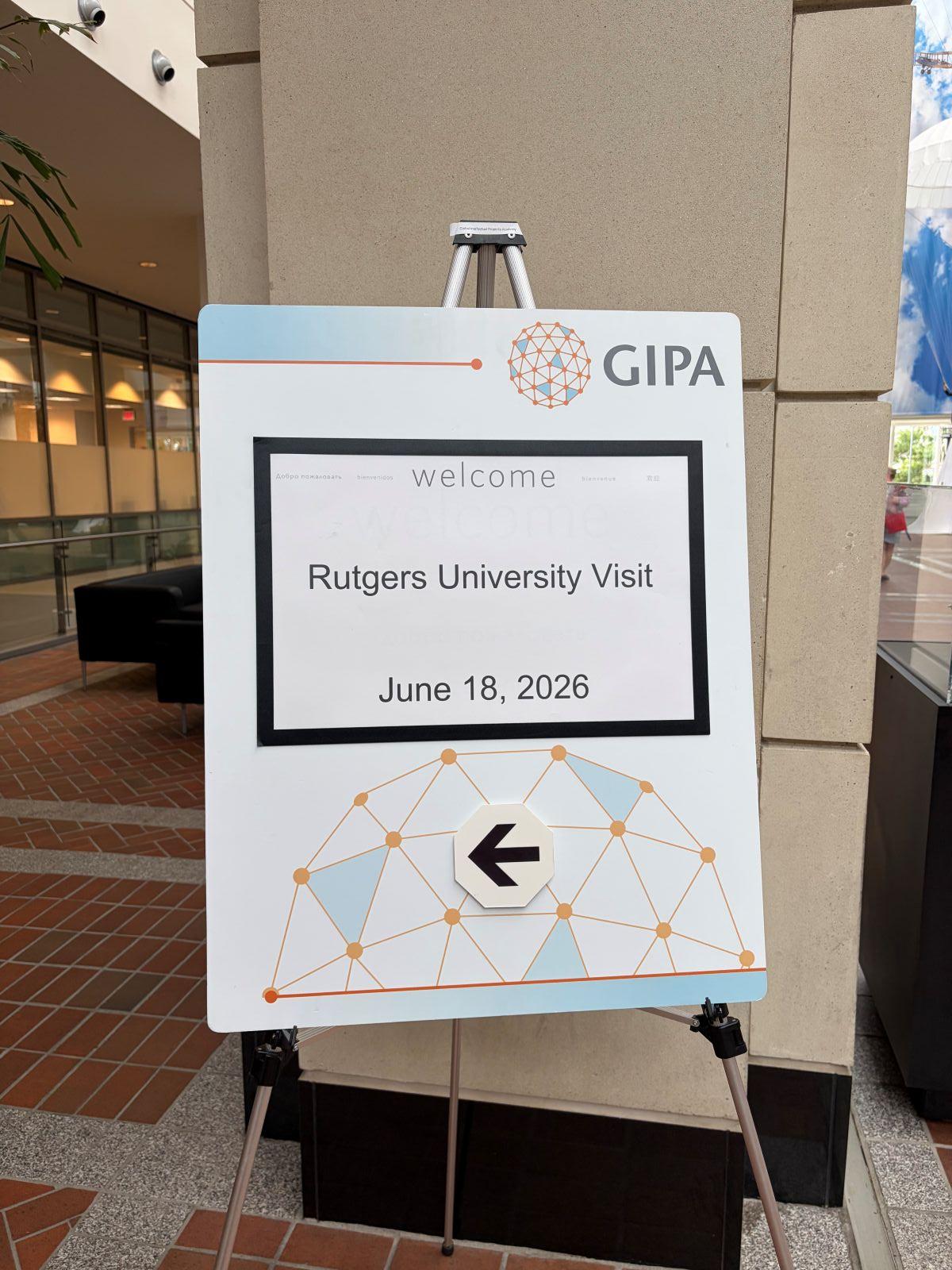
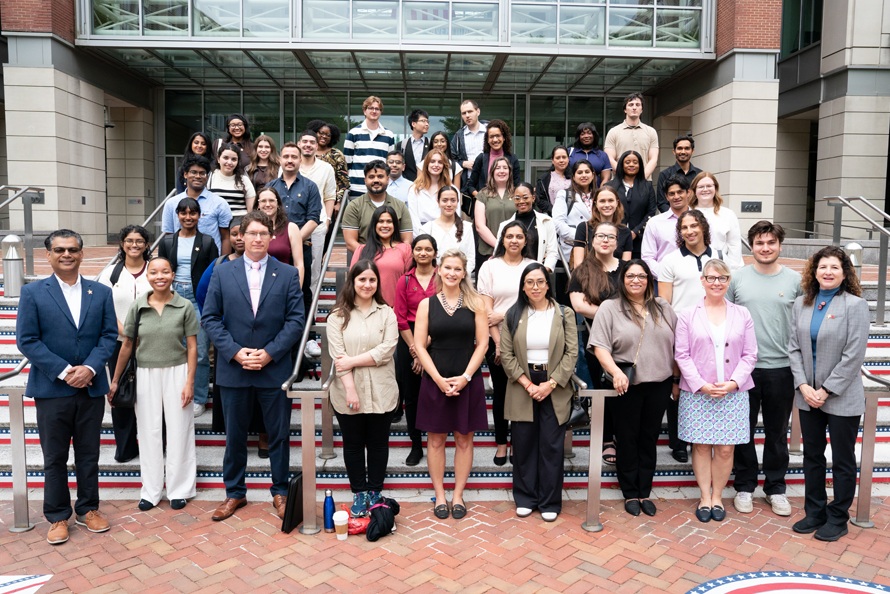
On June 18, 2026, Rutgers Master of Business and Science (MBS) students traveled to Alexandria, Virginia, for a day visit to the United States Patent and Trademark Office (USPTO), as part of the MBS “Fundamentals of Intellectual Property (IP)” course. Students local to New Jersey were provided a bus ride to the office in Alexandria, Virginia.
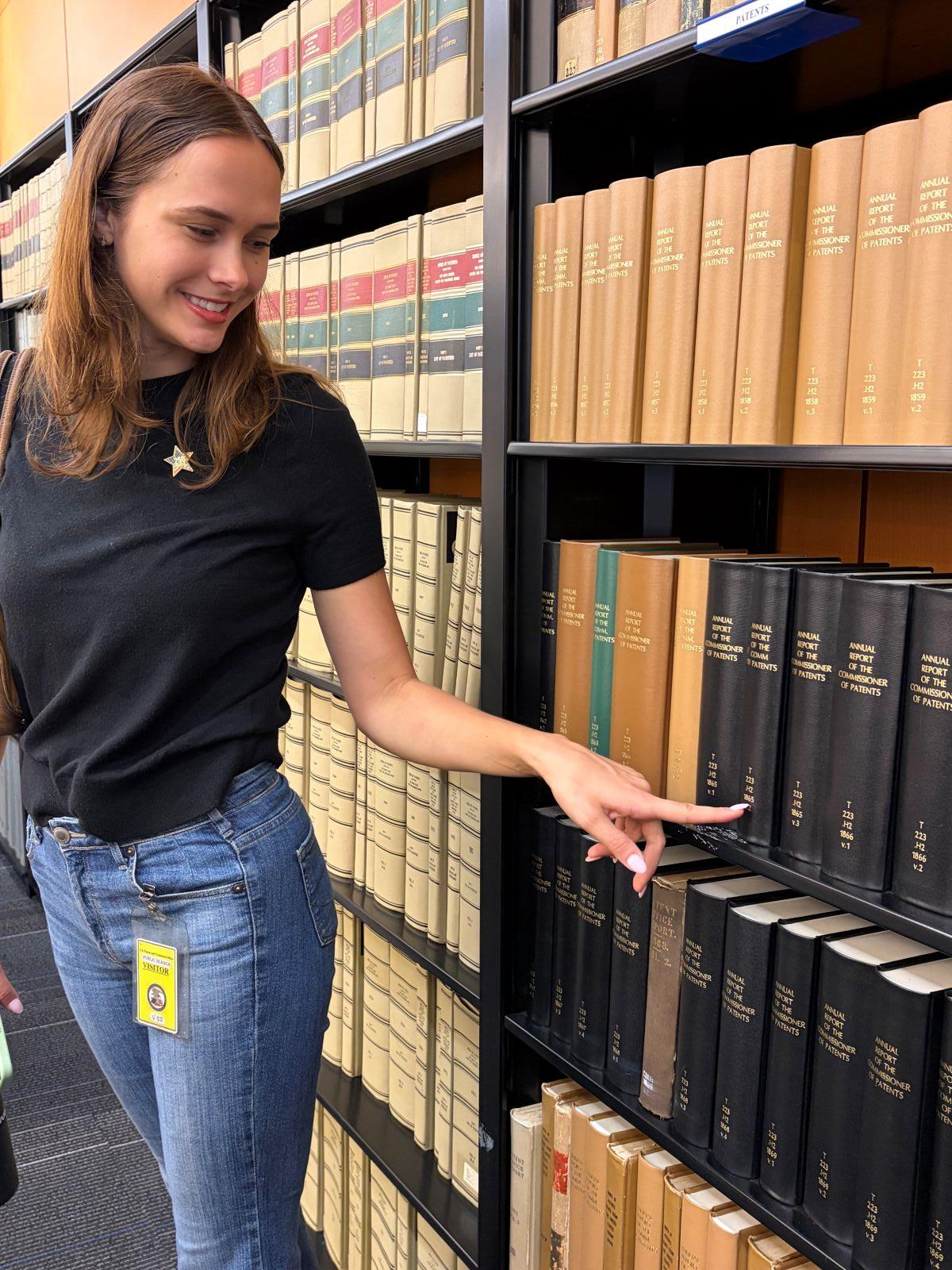
The morning kicked off with a tour of the Public Search Facility, led by Liz Jackson, Acting Director of the Northeast Regional Outreach Office, and Christine Nelson, Acting Regional Outreach Officer. Students explored floor-to-ceiling shelves packed with bound patent and trademark records going back centuries, and yes, some had even survived a fire!
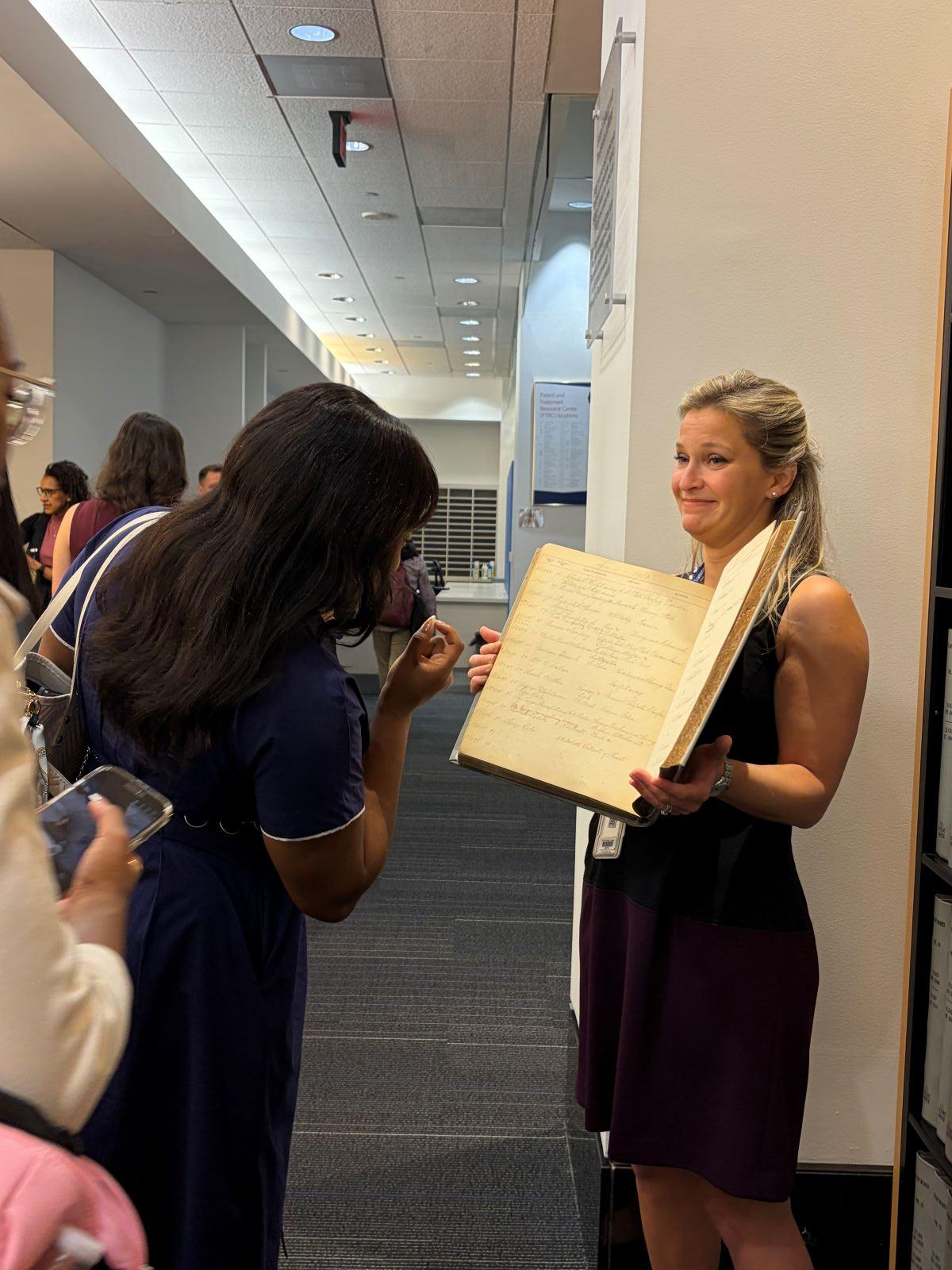
Students also got up close to a historical patent ledger, a moment that made the 236-year-old story of the office feel very real.
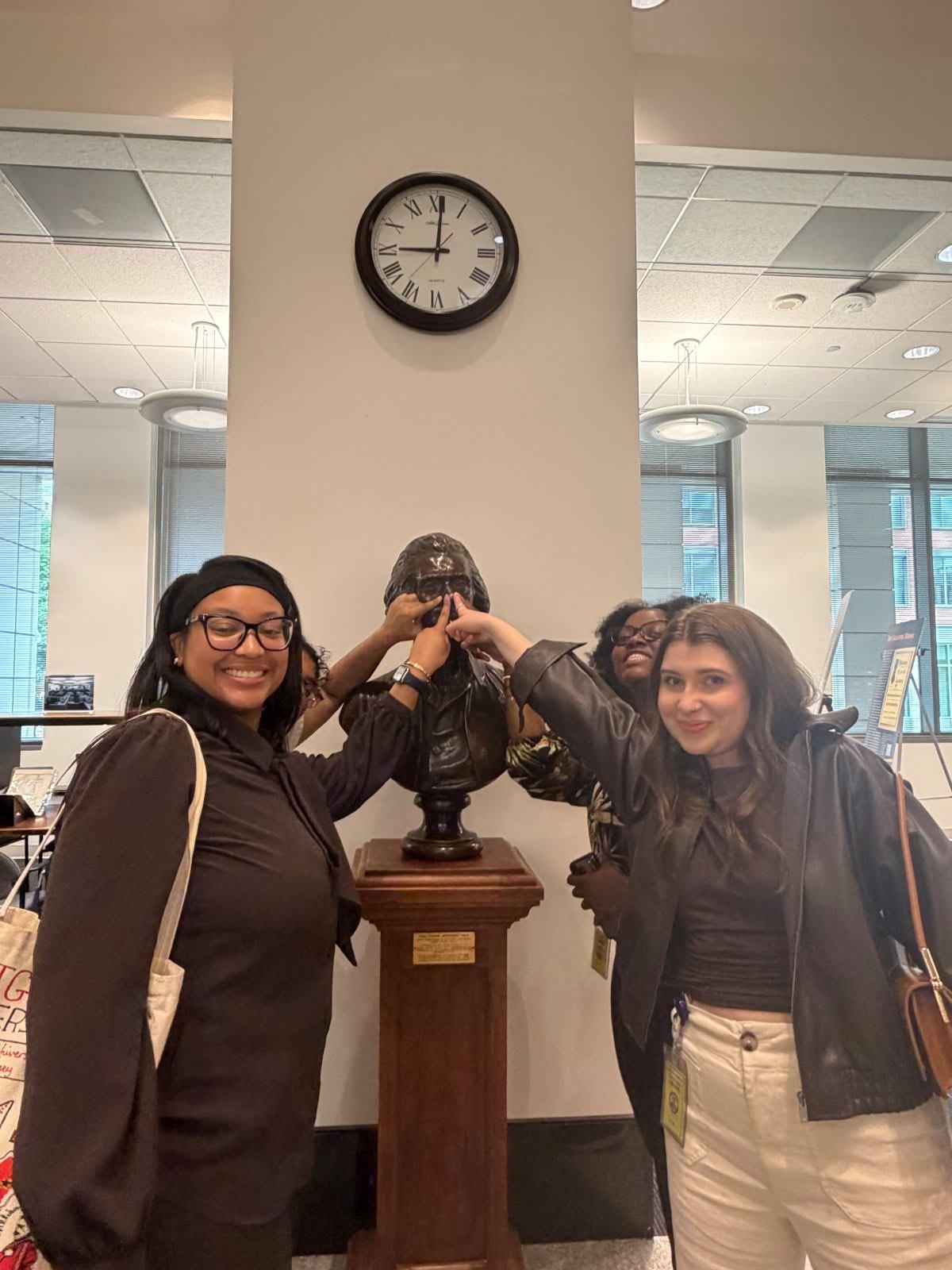
Before heading into sessions, students made sure to stop at the bust of Thomas Jefferson in the building. Rubbing his nose is considered good luck for your patent journey, and no one wanted to skip that opportunity.
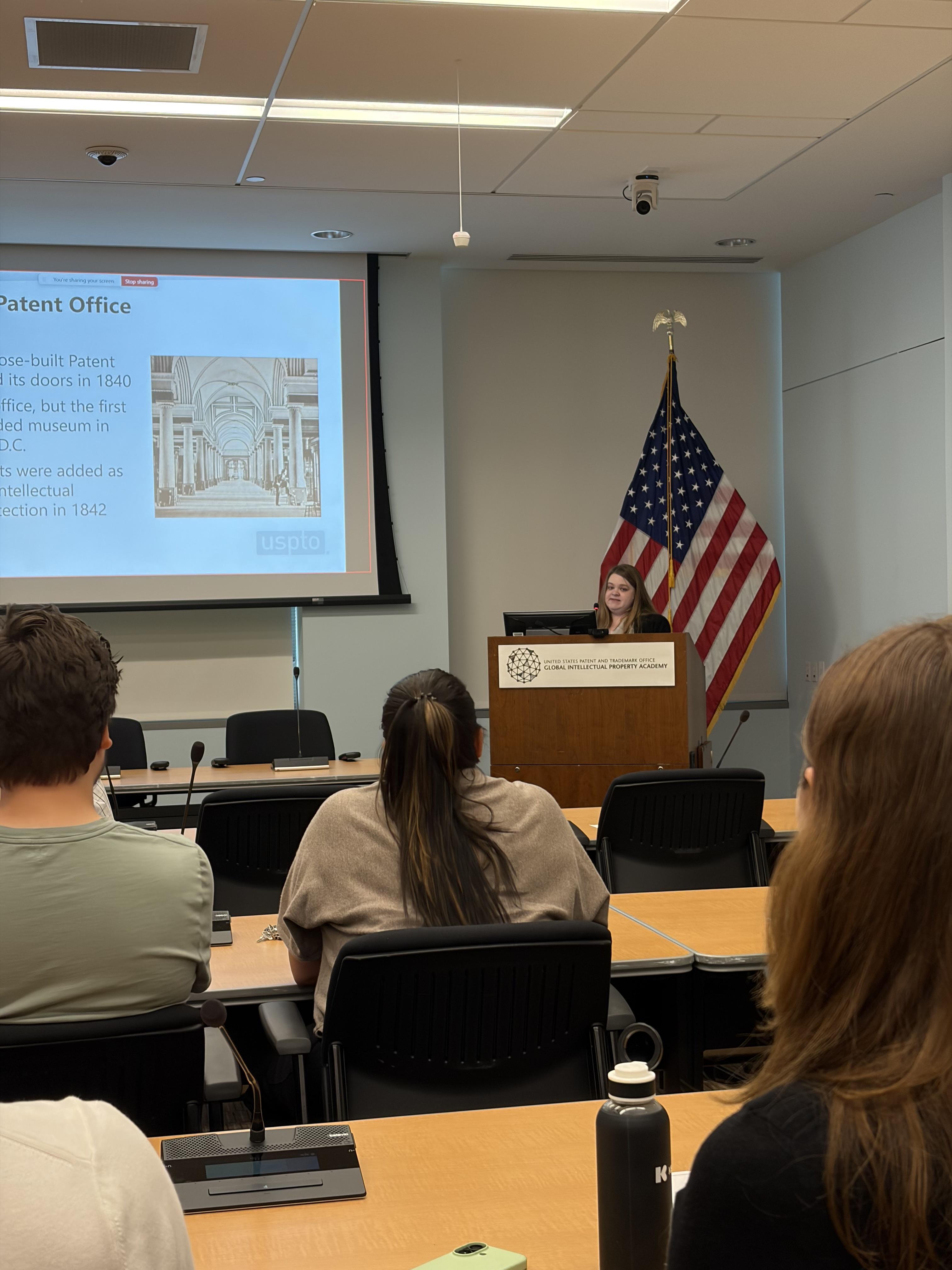
Rebekah Oakes, USPTO Historian, brought the group through the surprising, dramatic, and occasionally chaotic story of how the patent system came to be. Thomas Jefferson personally examined the first patents. A single employee, William Thornton, ran the entire patent office for its first eight years and later placed himself in front of a British cannon during the War of 1812 to protect its records. It was an interesting story, to say the least, and Rebekah was the perfect storyteller. You can explore more of this history through the USPTO's Journeys of Innovation series.
The MBS course “Fundamentals of Intellectual Property,” taught by technology transfer and IP expert DJ Nag, covers the fundamental and practical aspects of IP with an emphasis on IP strategies.
What made the sessions truly memorable was the people leading them. Every speaker, from Liz Jackson and Dione Simpson on the patent and trademark side to the outreach and international IP panels, was deeply enthusiastic, remarkably knowledgeable about their field, and genuinely passionate about making sure students understood and appreciated intellectual property. These were advocates, excited to share what they do and why it matters.
Liz Jackson walked students through life as a Trademark Examining Attorney with energy and humor. The USPTO received over 823,000 trademark application classes last year, and attorneys navigated new cases, applicant responses, and appeal briefs on tight timelines, but they are always working to make it faster and more efficient! The nuance surprised many: Dove soap and Dove chocolate can coexist because the goods are unrelated, but two similar-sounding names (like Lizzy and Lizzie) in the same product category cannot, even with different spellings. Students can search existing trademarks using the USPTO Trademark Search tool.
On the patent side, Dione Simpson and Christine Nelson described a role that blends legal analysis, technical research, and writing under real deadline pressure. Christine, a former chiropractor who now examines spinal and dental implants, was a reminder that there is no single road into this field and that diverse backgrounds are genuinely valued here. Those curious about a career as a patent examiner can learn more on the USPTO careers page.
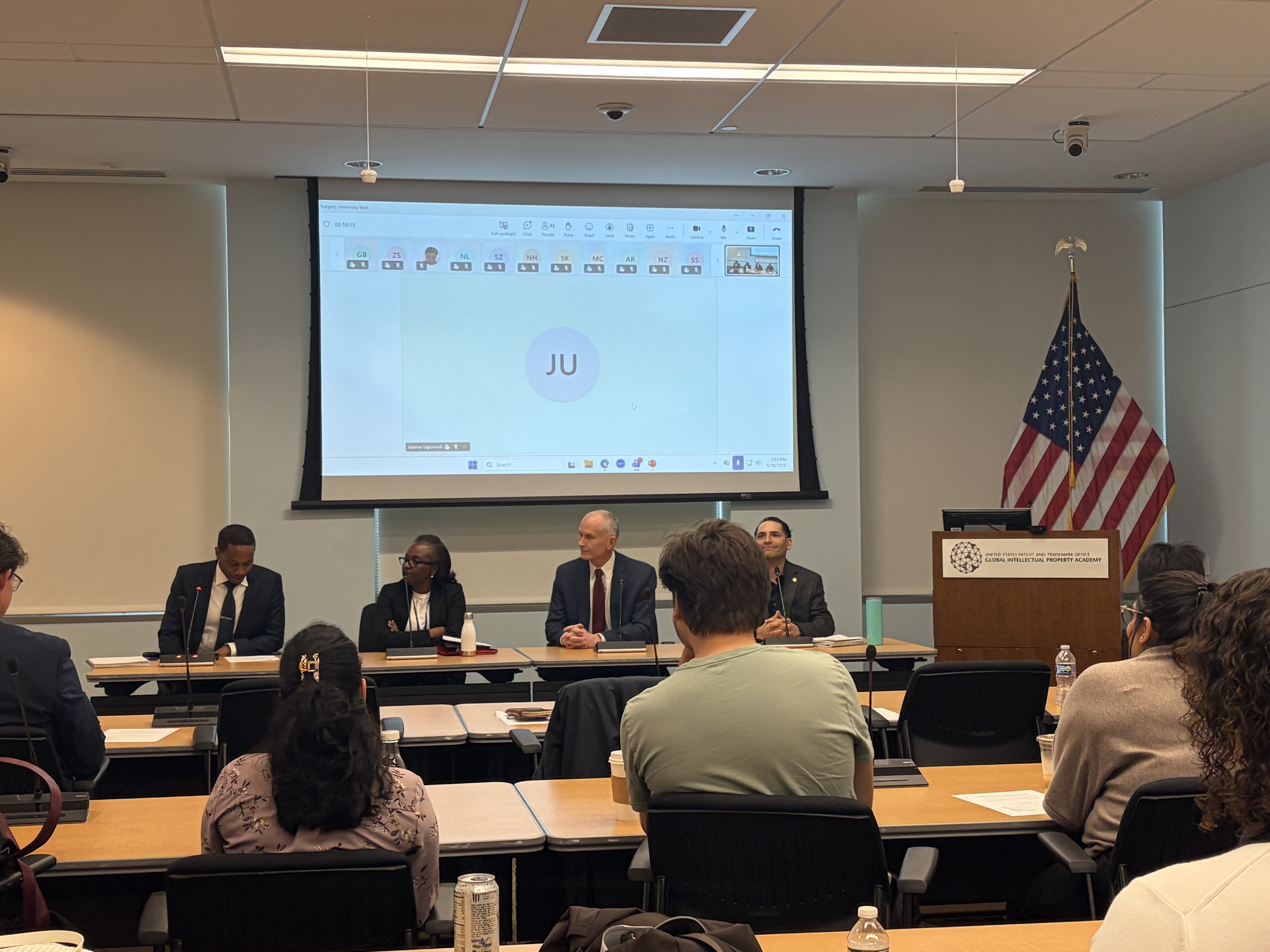
The afternoon panels were just as engaging. Speakers from the USPTO's outreach team shared how the agency brings IP education to communities across the country, from small business development centers to Girl Scout conferences. One panelist noted that a national survey found most Americans believe they understand IP, but their knowledge was “a mile wide and an inch deep.” The speakers’ commitment to closing that gap came through clearly in every answer. Helpful tools highlighted during the session include the IP Identifier and the USPTO YouTube channel, which offers free educational content on patents, trademarks, and more.
Students also learned that Rutgers Law has a USPTO-certified IP clinic, with campuses in Camden and Newark, a connection that felt closer to home. The final session brought in experts from the Office of Policy and International Affairs, including Deborah Lashley-Johnson, Director of the IP Attaché Program, and Dominic Keating, Chief Policy Officer for Education and International Engagement, for a conversation about IP protection that stretched well beyond the U.S. border.
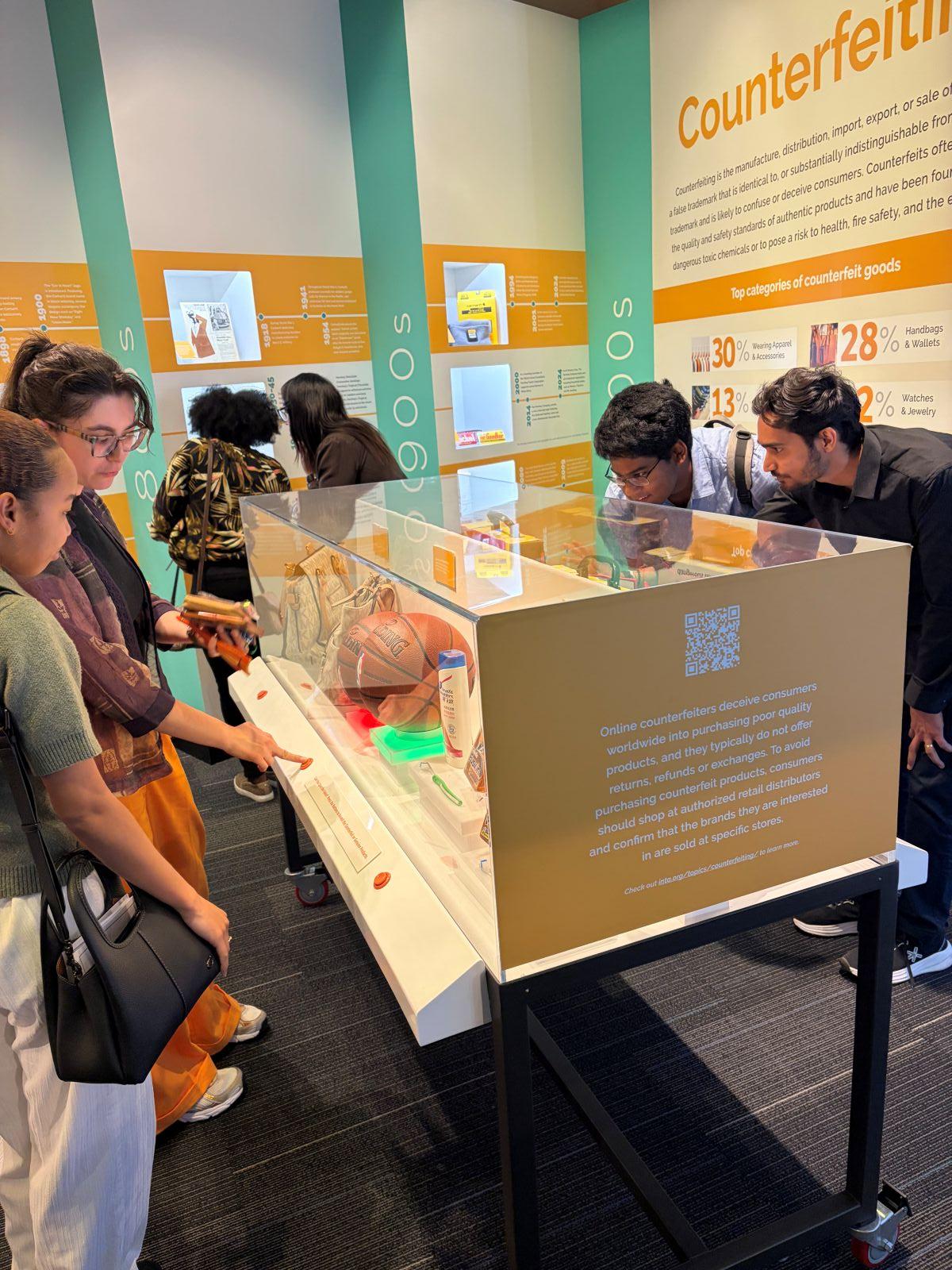
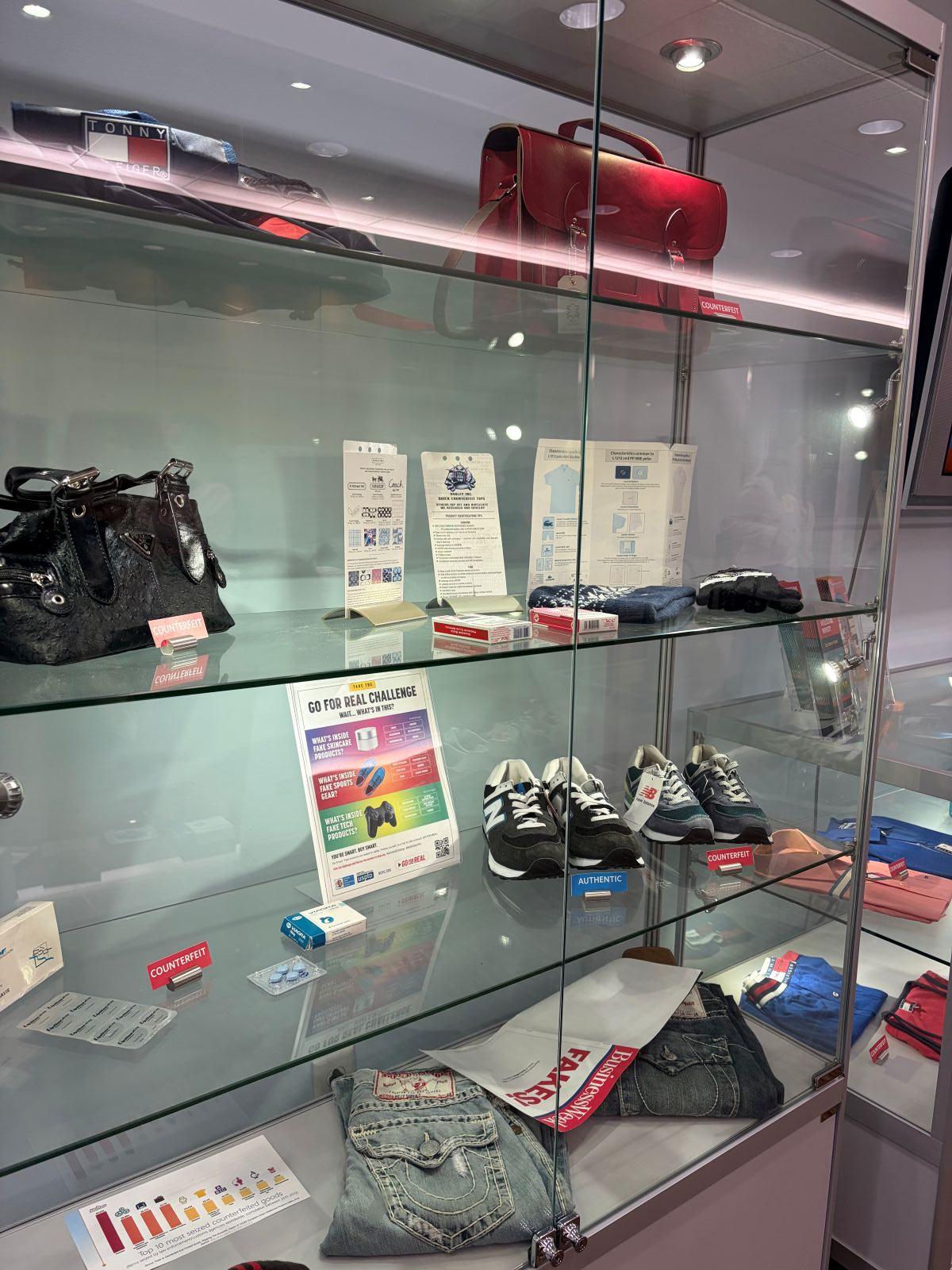
The day closed with a self-guided tour of the National Inventors Hall of Fame Museum, and this is where things got fun. Students encountered a display of counterfeit goods, from fake designer bags to knock-off sneakers and counterfeit medication, which made trademark enforcement feel far less abstract.
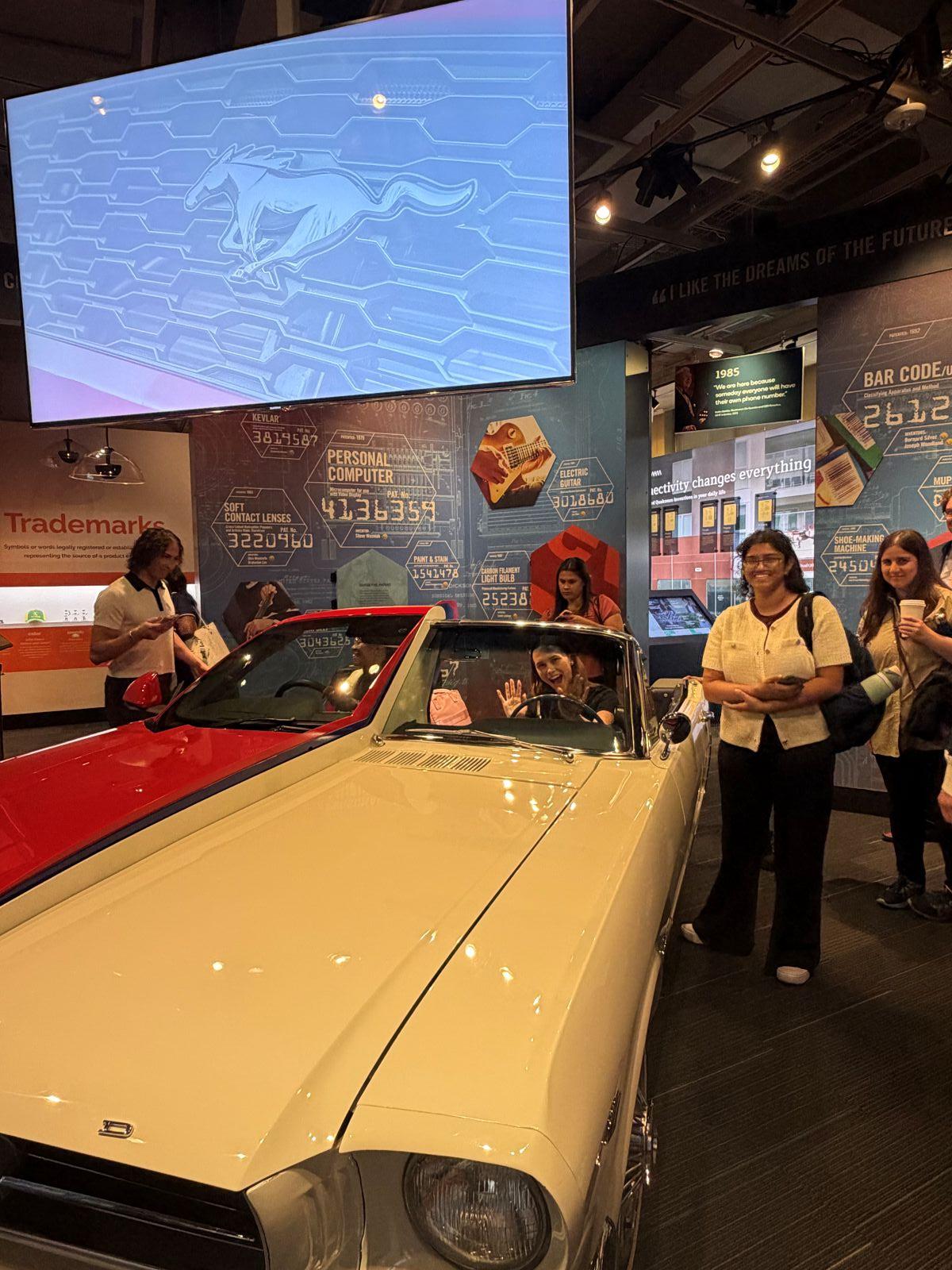
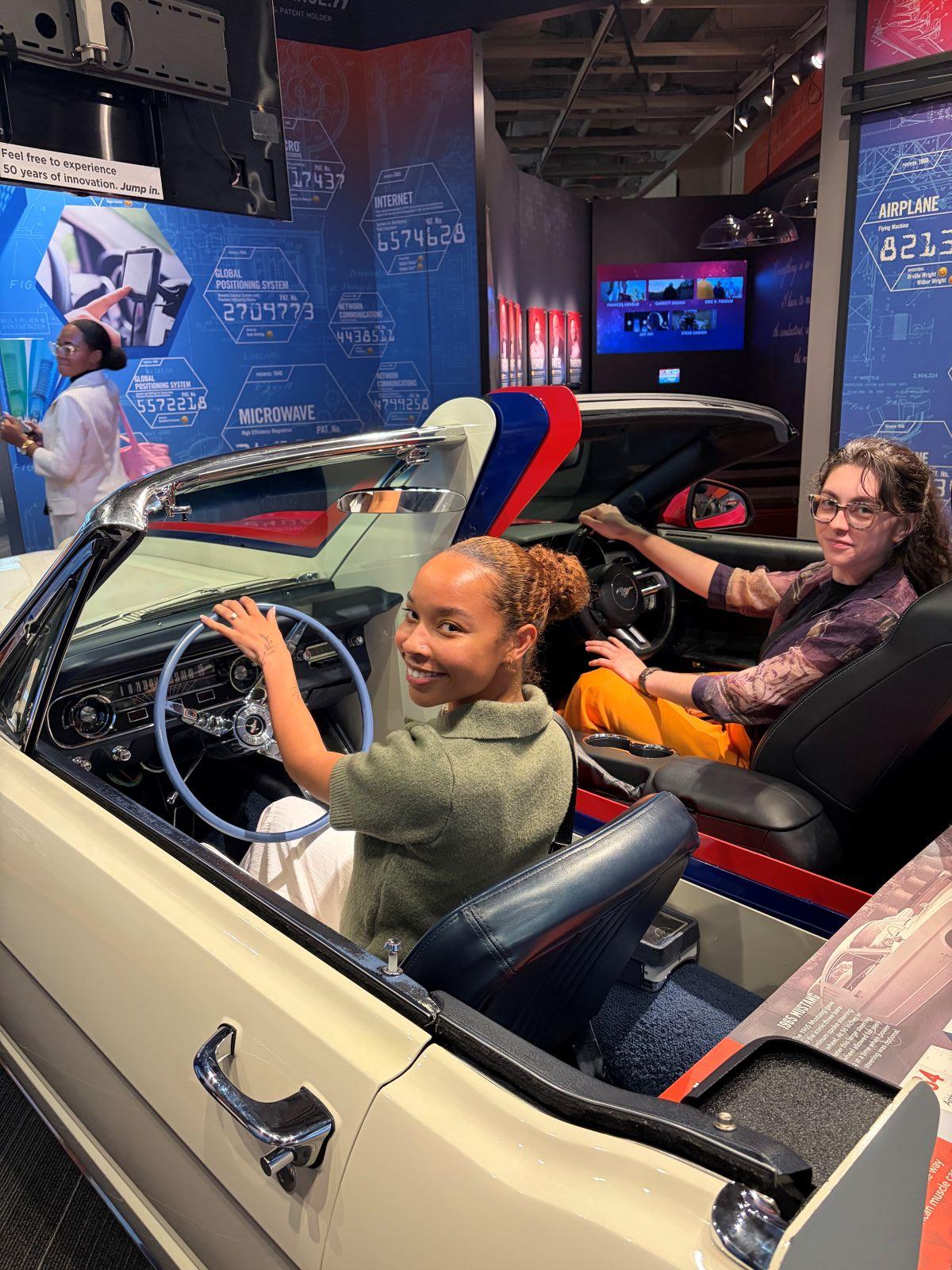
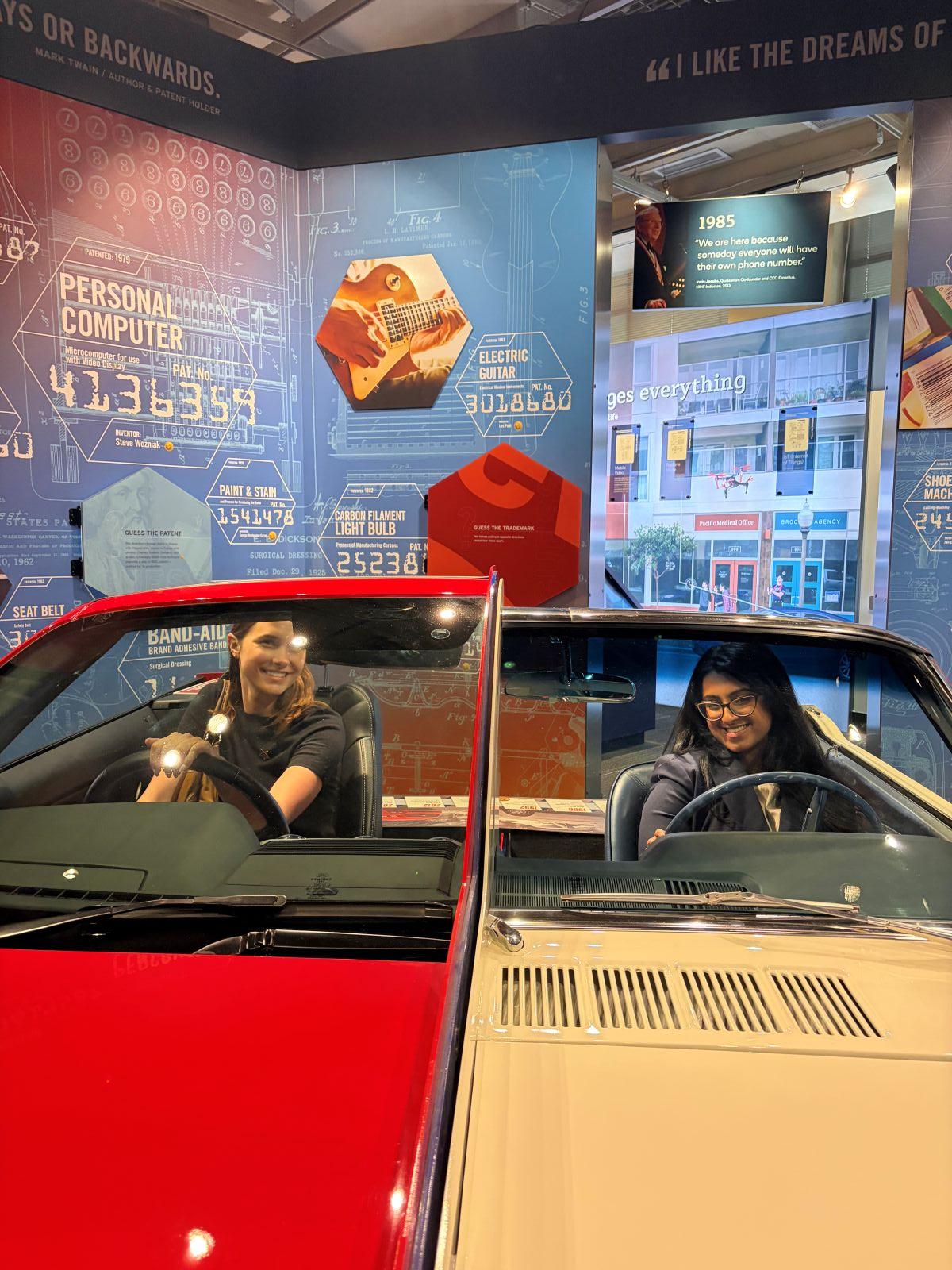
The centerpiece of the museum floor is a Ford Mustang split right down the middle: one half is a gleaming vintage convertible, the other is the newest Mustang design. Students did not just admire it from a distance. They climbed in, grabbed the wheel, and took turns in both halves of automotive history, with plenty of laughs and photos to show for it.
It was the perfect ending to a day that was equal parts educational and genuinely exciting. For MBS students concentrating in Biotechnology and Genomics, Technology Management, Personal Care Science, and beyond, understanding intellectual property is not an abstract requirement. It is a real career skill, and visiting the USPTO made it feel exactly that way.
This article was guest-written by MBS student Meher Niravethu.