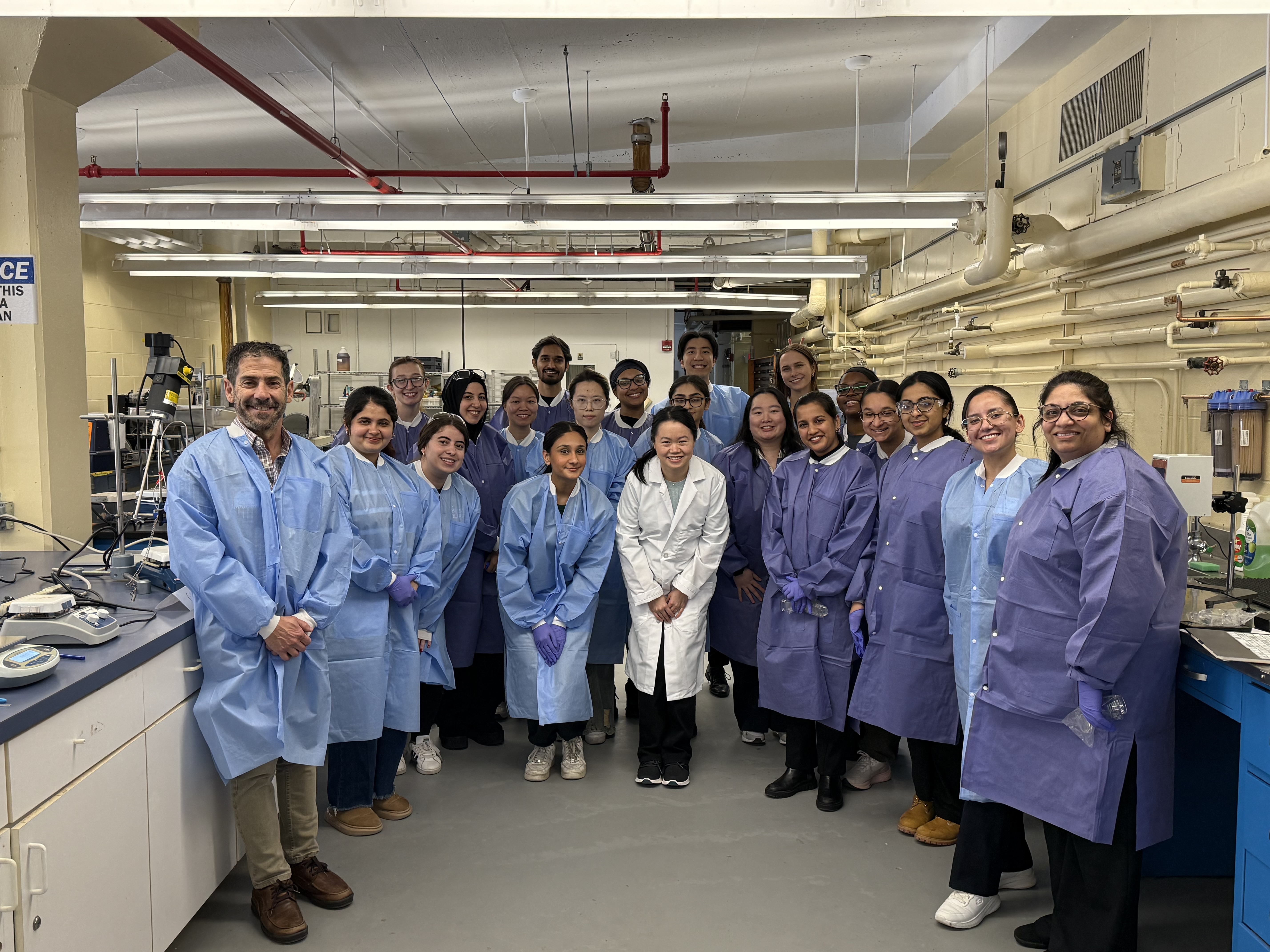
Graduate students in Rutgers’ Master of Business and Science (MBS) degree program, Personal Care Science concentration, gained hands-on experience in cosmetic formulation during a three-day lab, where they developed products including face cream, lipstick, and a cleanser.
Organized by Dr. Jay Goldring, MBS Graduate Director and advisor for the Personal Care Science, Applied Food Science and Technology, and Drug Discovery and Development concentrations, this lab provided students with practical experience in lab work and product formulation.
”Our Personal Care Science program gives students the knowledge and skills to excel within the cosmetics industry,” said Goldring. “Cosmetic formulation is a separate skill that could give them an edge in a competitive job market.”
This insight came from the MBS Industrial Advisory Board, a group of STEM-based business leaders representing a range of industries. Hearing this and understanding the need for experiential learning, Goldring developed an immersive formulation lab within the MBS concentration in Personal Care Science.
Coordinated with help from MBS alumna Yingxia Wang, senior manager of personal care formulation at a major cosmetic company, this experience is designed to give students something employers consistently value: real, tangible cosmetic science practice before graduation.
“We love to give students who haven’t had formulation experience the opportunity to get in the lab and make products,” said Goldring.
Benefit of Hands-On Formulation Experience
The Personal Care Formulation lab took place in the Food Science Building. Overseen by Goldring and Wang, students formulated:
- An emulsion (face cream)
- A lipstick
- A cleanser
- An experiment examining the effect of salt concentrations on viscosity
Students weighed raw materials, operated overhead mixers, controlled heating and cooling cycles, evaluated batch consistency, and created stable emulsions.
“They can say that they’ve formulated when they have job interviews—that they’ve made an emulsion, a lipstick, a cleanser,” said Goldring. Goldring has more than 40 years of experience in quality, safety, and regulatory compliance programs in government and the pharmaceutical, food, and consumer products industries.
Wang, who graduated in 2025, said:
“A lot of the industry is looking for students who have some type of experience.”
Goldring added that this experience provides students with greater exposure to the field, helping them determine the type of work they enjoy.
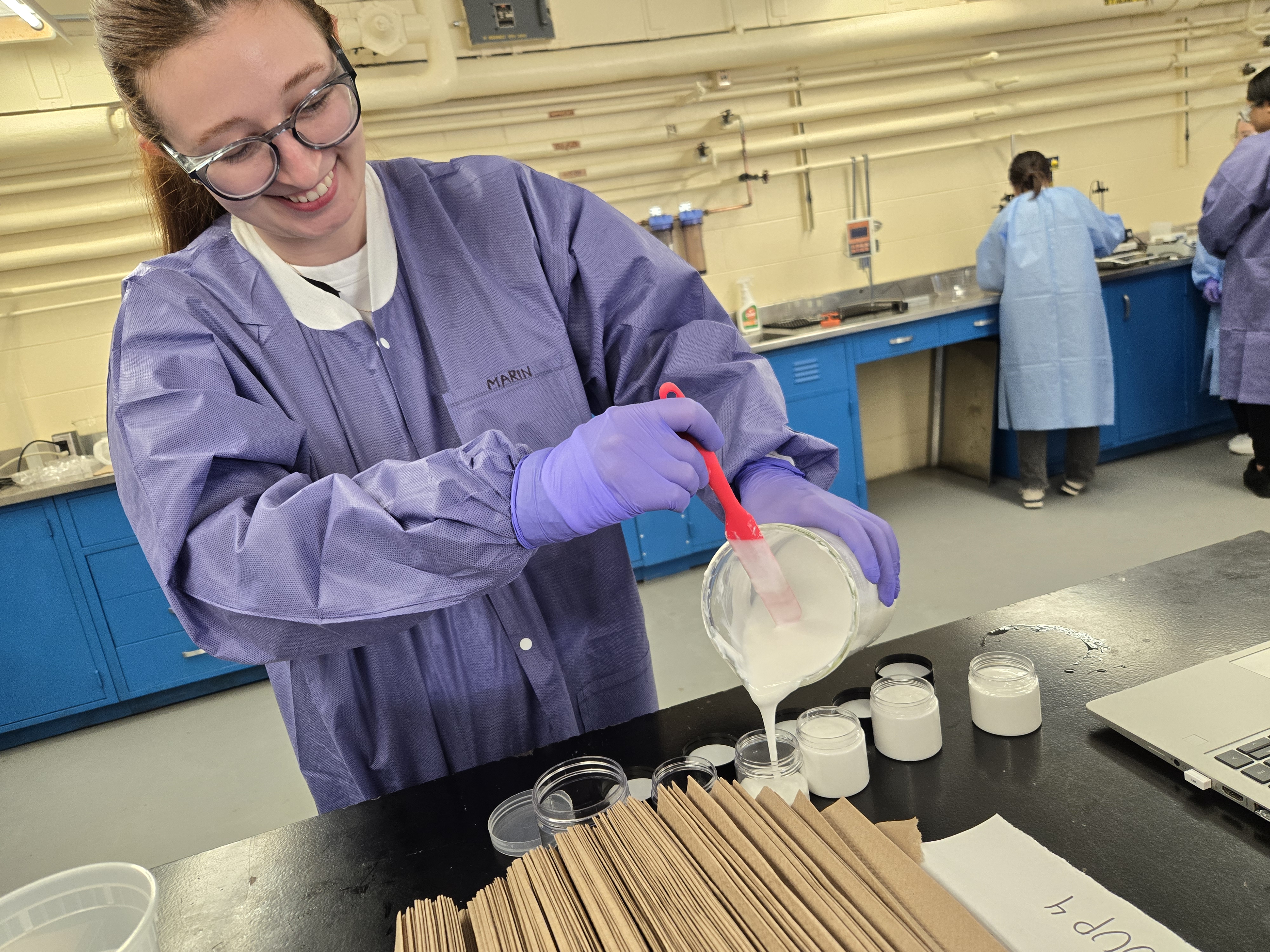
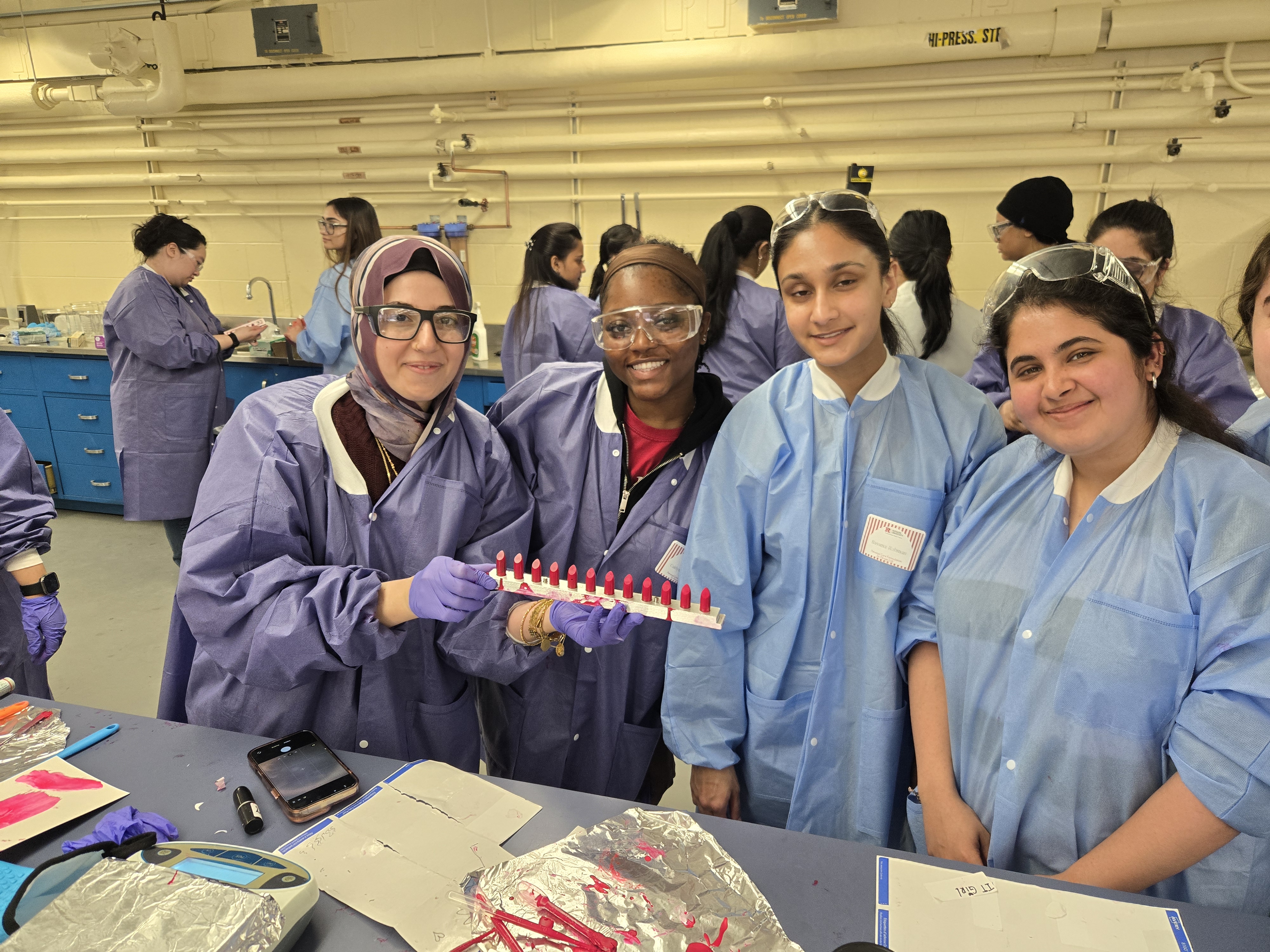
Translating Personal Care Science Theory into Practice
This formulation lab complemented students’ academic coursework.
Wang and Goldring worked closely with Professor Ricardo Diez, instructor of the MBS course “Product Development and Formulations for Personal Care Science,” to design the experiments so that the concepts translate to the formulation lab.
“We jumped straight into the formulation,” Wang explained. “The concepts are covered in the lecture courses. For this lab, we wanted students working hands-on from the very beginning.”
However, the lab didn’t end with product creation. Students evaluated their formulations using both technical and subjective criteria.
Cosmetic science requires balancing measurable performance with subjective experience. The lab incorporated both dimensions, highlighting the real-world complexity of developing successful products.
Experiential Learning Prepares Students for Careers in Cosmetic Science
Goldring saw a great response from students before the lab even began. The lab session filled within hours of announcement.
Several students noted the benefit of highlighting this experience when searching for jobs in their desired fields.
This lab gave MBS student Tejaswini Varagani, who plans to graduate in 2026, hands-on formulation experience she can include in job applications, she said.
The lab also turned abstract concepts into tangible concepts. It was exciting to see these concepts in action, said student Briana Adindu.
Camila Carvajal, who holds a medical background but lacks experience in formulation, noted the benefit of seeing the equipment, techniques, and materials used.
Students value opportunities for both technical growth and collaboration.
“You can see the smiles on their faces when they’re in groups of fellow students doing this kind of activity,” Goldring said. The lab became a professional environment—allowing students to take part in team-based problem solving, shared troubleshooting, and peer networking. It was a critical networking event for them, said Goldring.
Wang added, “I’m really happy to see the students so excited and enthusiastic about being here. I think that makes their experiences a lot more enriching, and it makes my job a little easier. Seeing students who really want to be here, learn, and get into the details of the process is really exciting for me, too.”
Cosmetic science careers can lead to roles in formulation, research, product development, and more. MBS alumni in Personal Care Science have gone on to work at companies such as L’Oréal, Johnson & Johnson, Shiseido, and Colgate-Palmolive.
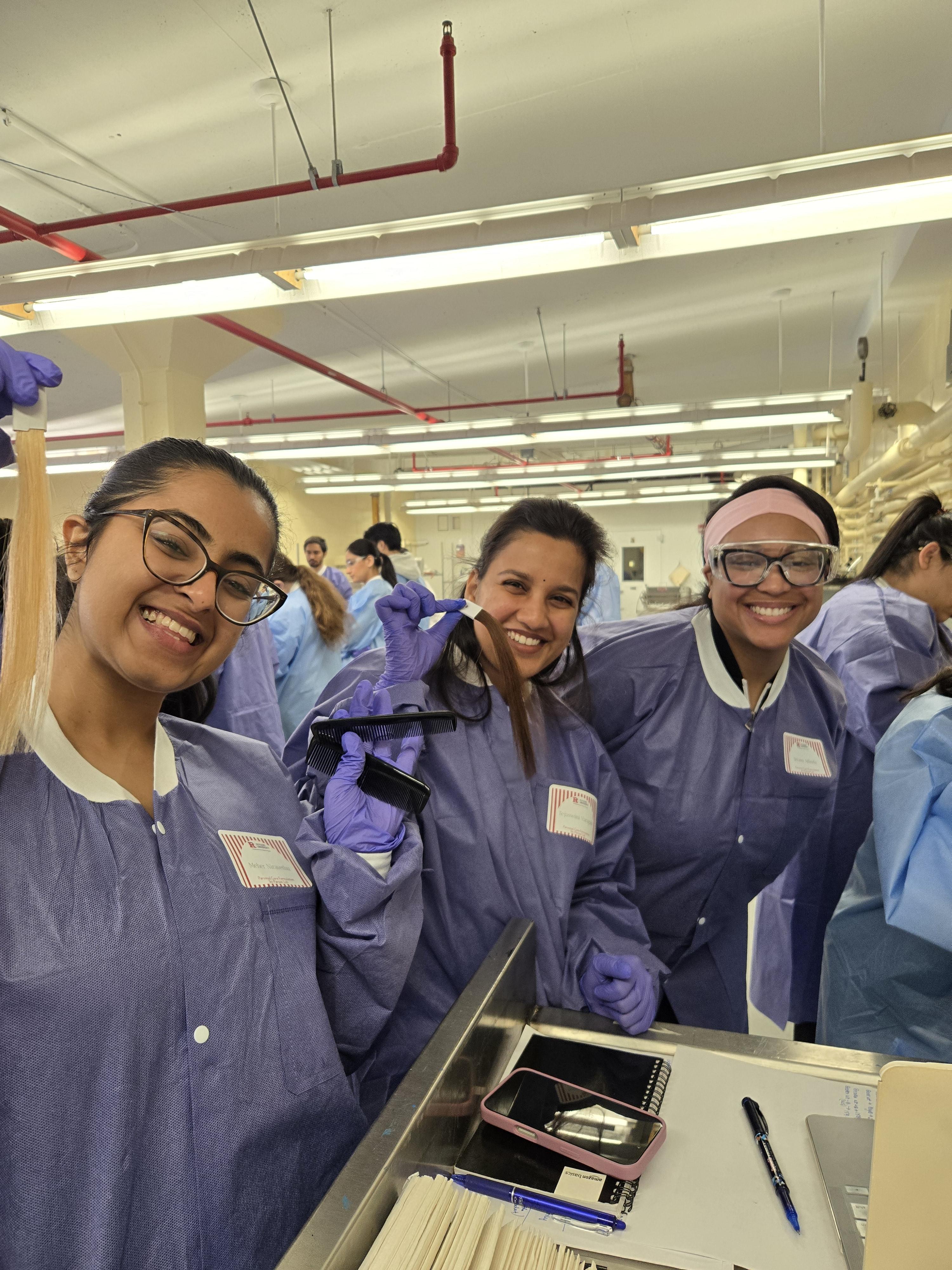
The Master of Business and Science degree in Personal Care Science prepares graduates for roles in cosmetic and personal care product development through applied coursework, industry-informed curriculum, and direct engagement with professionals actively working in the field.
MBS offers many opportunities for experiential learning. Last semester, Goldring arranged field trips to locations in New Jersey and the surrounding area to see locations central to cosmetic science and cosmetic innovation for students in the course Cosmetic Quality, Safety, and Global Regulation.
To learn more about the Master of Business and Science degree, visit our website. You can also join us for a free informational webinar or book an appointment with an advisor to find out if our program is right for you.